

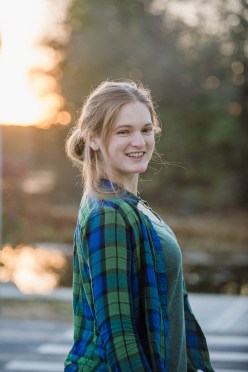
 It’s my great pleasure to host @writevent creator, curator, author and Elusive Press head Mica Scotti Kole. Not only does Mica organize all our #WritingCommunity writer games into one convenient go-to place on Twitter, but she also curates and features writing and poetry contests from around the world. And if that isn’t enough, she also writes and promotes others through her own imprint Elusive Press.
Today, Mica discusses her journey from game organizer to writer, publisher and promoter and what it takes to build a mighty platform.
It’s a lot of work. Mica asks: Is it worth it?
26,000 Followers: Was It Worth It?
My History
I started Free Writing Events about three years ago (it’s kinda fuzzy in my head… has it been longer?) after attending a conference that insisted I needed a platform to be a successful writer. The arguments were sound, and so I hopped onto Twitter and got started. At another conference, I received great advice from author Chuck Sambuchino: if you want to build an audience, then appeal to that audience. Writing a book isn’t enough. You have to provide something.
Well, after cruising through the Twitter writing community, I made a discovery: there were tons of writing games, but no definitive place to find all the day’s themes in one place. Some people might have lists, but they were always out of date (I’m guilty of this sometimes too), and no one was very consistent about posting or tracking themes. Yet these games were popular—so I saw an opportunity. And my theme list, and theme posts, were born.
From there, I expanded to cover free contests (this mostly came from the excitement, demand, and general confusion surrounding pitch events like #PitMad)—and today, I’ve got over 24,000 non-bot author/reader followers on Twitter, and a newsletter with about 2,100 people on it. I’m a little bit of a household name in the Twitter writing community, and I’m proud of that.
But was it worth it?
Pro: It Got My Business Off The Ground
I am staunchly against spamming, and I post about my own books and services only twice a day or less. While I’ve yet to see what these posts do for my book sales, it is the only place where I have ever advertised my editing services. And it got my editorial business off the ground, ultimately providing me a way to make a living off editing (albeit at about a half or a third of my husband’s income). Having followers in the tens of thousands is the only reason this worked. Now, however, my clients are coming in from referrals and repeats, and I don’t really need @writevent for advertising my services any longer. Here’s hoping it makes a difference in my book release!
Pro: It Put My Finger on the Pulse.
I’ve made over $2,000 from winning some of the contests I’ve posted about. Searching the contests each month led to my first traditional publication, and to winning the biggest award of my life: Writers of the Future. I would have never met Orson Scott Card (and many other big names) in person, or walked a red carpet, or created Elusive Press, if I hadn’t created @writevent first. The connections I have made as an editor, author, and social media “maven” have created crazy opportunities for me.
Pro: It’s Been So Gratifying
Being a freelance editor has been a true honor. Seeing my clients succeed, and cheering for them—I wouldn’t trade that for the world. And being @writevent has made me feel so useful, which is great for someone with anxiety. You can really find a tribe and a purpose on social media. However….
Con: It Saps You
I used to enjoy Twitter on my personal account. Now, I never really play Twitter games, or scroll the feeds, or get involved with my friends and build meaningful relationships. I’ve made Twitter into a chore for myself. Every day, posting the themes—and every month, compiling events—it is so draining. When you make a job out of something you love, and don’t actually get paid (directly) for doing that job, it can sap all the fun out of it. I had to stop running #FriDare because of this, and the thought of ever doing #Write4Life again makes me want to cry. I want the enjoyment back—but there just aren’t enough hours in the day.
Con: It Distracts You
What is my life goal? To have 30,000 followers and a successful editing business? Nope. My goal is to be an author, making a living off my words. And the three years I’ve spent on @writevent has only really distracted from that goal. Yes, I made so many connections that will be vital to me (I wouldn’t trade my journey for the world), but the whole idea of “needing a platform” is dangerous. Would your time be better spent honing your craft and producing loads and loads of work—or by getting more followers?
Con: The ROI Is Not Great
My advice: if you are building an audience, build one with a newsletter, in your genre and age category. I may have 24,000 followers, but my theme posts still only get 35 retweets each day; and I may have 2,100 newsletter subscribers, but when I asked them to subscribe to my press’s newsletter, guess how many did it? Ten. This happened because I cast too wide a net, and I have all authors as my followers—not just fantasy authors, or readers (this is my genre). Of course, I got the wide net of followers because of my subject matter (free contests), and that’s what got me all the other stuff I mentioned. In short: you’d be very surprised at how few followers/subscribers actually turn into buyers. And I don’t recommend ever having high hopes for a Patreon, Ko-Fi, Kickstarter, or similar things. They sound too good to be true because they are.
In Conclusion
What I mean to say with all this, is that there is always a trade-off. Never lose sight of your TRUE goal, whatever that may be. It needs to come first. Social media and “platforms” are nebulous and fickle, and your own time (especially your writing time) is valuable. Don’t get sucked into anything that you can’t see having a return. But even if you do, you’ll get value out of it. Mine was ultimately worth it. Will yours be?
Excerpt
“Time to get up, lazy-drake,” he ground out, trying to rise.
But she held him against her. “The storm is still raging, scaredy cat,” she whispered.
“I have to go,” he said. “If I stay, I won’t be able to stop.”
She tightened her arms around him. “I don’t want you to stop.”
They clung to one another, her words lingering. In some distant corner of her mind, she understood what she had offered. She would trade her entire future, just to feel more of this….
Then he jerked away, staggering backward onto his feet. She cried out at the suddenness of his leaving. Lightning flashed across her stone walls. She hadn’t even heard the thunder that preceded it.
But Jorr was perfectly aware of the storm, now that they weren’t touching, now that her magic had gone out of him. He cringed into the corner of her quarters, and she rose to her feet on unsteady legs. After a wobbly step, she reached toward him.
“No,” he said. She stopped.
“Jorr,” she said, crying now. “Oh, Jorr. I’m sorry. Please let me help.”
He shook his head. “I’ve been weak long enough.” The sky rumbled, and he winced against it. “Please, don’t touch me, Raena. Don’t let me ruin your dream.”
She opened her mouth, and a thousand words filled it. I love you. I need you. Be with me.
But none of the words managed to escape her, and Jorr fled like a ghost in the rain.
Free Writing Events (aka @writevent on Twitter) compiles and posts about all free-to-enter online writing contests and pitch events for authors, poets, and essayists. During the business week, FWE also pins a list of that day’s writing game themes to Mica’s profile. You can get her contest newsletter here or visit the Free Writing Events website here. In real life, she goes by Mica. She started Elusive Press on the first of the year, and their first book, The Rose Contract, is free this week–with the entire series releasing at once!
The book should be free from March 14th to the 20th.
Here is the launch party info link



 AB: Publishers, large and small, are like any other organization. They have guidelines and rules to follow. You need those, especially when you’re starting out and really don’t know what you’re doing. Friends will call you out on things, and you say to yourself “do they really know?” When your fellow authors at the publisher and the publishing team call you out, you listen because it’s part of the exercise, part of belonging, part of learning.
 Lexi: I felt constricted in many ways from cover art, release dates, and overall content. I also felt like I wanted better promotion for my work and wanted to release more works (not according to the houses allotted schedule). There are a lot of options on every front when you have more freedom.
 Lexi: I am what you call a hybrid author (both traditional and indie). With more independent publishers you have a lot more control over the details of your books. From length to content of the story. Yes, I still adhere to the guidelines of mainstream publishers and work with editors that do the same. Let me offer an example. As a romance author if I don’t want the standard girl meets boy and boy rescues girl scenario, I can have a story that is slightly more imaginative and realistic. I can say that they have a meet cute and she is already strong on her own and he’s not emotionally unavailable (aka robotic). They both meet challenges, but their love and support for each other helps them to conquer them. (Make no mistake, I do love those types of stories. I just like it to have more dimensions.)
 AB: The same pluses that come with being your own boss. You can show up to work when you want. You can choose not to work when you want. I tend to go hard when working on a project. From concept to finished manuscript to publishing to marketing. It can be a grind. There are so many theories out there about how often to publish, how best to affect the algorithms. I did that for three years at the end of which time I had to stop for almost a year. I needed to set a new pace for my work and for me as a person. I’m doing that now. It’s wonderful.
 AB: I miss the team and the camaraderie. From the moment I signed, they were all there ready to field my untutored questions and reassure me when I got lost. As an indie, I felt like a group of one for a long time, but over time I’ve found other like-mindeds; other indies working toward the same goal: generating quality work and getting it out there. I have peeps again. I don’t feel alone at all.
 Lexi: With traditional publishers you have their audience built in. When you release your sales are more predictable, you are releasing to readers who know and trust their brand. Also, in most cases editors come with publishers. The tricky part there is finding one that works well with you and understands the voice of your story. I have a professional editor that I work with either way, so for me I don’t lose anything.
 Lexi: First, people instantly look for publishers and imprints. It tends to signal quality of work and indicates a more professional work. Two, the freedom. I like being able to control the various aspects of my work and when you go that route you have complete creative freedom. That is an incredibly freeing feeling. That makes me confident to release all of my work because it is the exact voice I want out there.
 AB: One of the things I noticed on the book fair circuit was that potential readers would turn the book over and then say, “Oh, you’re independent.” The first couple of times it happened, I took it as an invitation to sell my virtues. The next time it happened, I asked the person what they were looking for and they said, “the publisher.” What is the publisher on the back of a book? It’s the imprint. My imprint is real; it’s registered in my country of origin and all my promo materials carry it plus the Independent Author Seal I designed. But I find having the imprint logo gets me past the first hurdle in a face to face. Rather than say “Oh, you’re indie” they say “Cool” or “What?” and then we can talk about the books. It’s a great icebreaker.
 AB: If you are already with a publisher, you must ask yourself why you want to DIY and then be prepared to do the research. Do you: know how to format a book; design covers; format your book into all formats (there are a few); know a good printer for your paperbacks; need to hire a professional editor or a professional cover designer; have a budget that can cover all your wants v. your needs; know how to use the advertising features across the platforms; understand the algorithms; have resource people who can guide you? And so on. I don’t want to mislead. It’s daunting.
 Lexi: First, write the book. Second, spend time editing so that it is a high quality book. Third, learn the ins and outs of what you need to do to publish it (formatting/covers), protect your work, and promote it. And finally, GO FOR IT!
 Lexi: I am always looking for new ways to level up my writing.
 AB: I go slow and slow=better. Being my own boss now, I don’t feel the pressure to deliver a new book each year. I wish I could, but I find that if I take the time to send the manuscript out for editing by someone with cred and then shop the cover and blurb for feedback before going to print, I get a more effective piece of work; effective in the sense that I don’t have the goofy spelling errors (pore and pour—OMG!) or awkward paragraph splits to name a couple. It really takes time to catch these things. That means, no more rushing.
 AB: There are two things that have been there from the get-go. The first is the oft complained about omniscient narrator. Dunno why poor omni is disliked. For me, omni entertains as I create, dropping dollops of knowledge onto the reader above what the characters know. I just love having secret knowledge and sharing that with the reader. The second thing readers will find is treachery of the old Byzantine kind. I’m a history nerd, and old Byzantium—fair or not—is renowned for its ability to hatch incredibly complex plots with ease. I don’t write complex plots per se, what I write are characters who are either complex and don’t know it or presume to be complex and aren’t but credit themselves with being crafty. That’s fun stuff to write and it’s going to be there every time.
 Lexi: I like to show that my lead females are not in need of being rescued, but are looking for an intimate partnership. One that makes them stronger and helps both characters face some sort of challenge and to do so by finding the strength in their love.
 Lexi: I deliver the exact book I envisioned on my terms.
 AB: That’s easy: getting to know the other side of the business. I can say this without exaggeration. After getting my first book to market under the new imprint, I was left with the feeling that writing the book was the easy/fun part. The steps required to deliver a quality piece of work (now called “the product”) were numerous, involved and filled with “either/or” choices. I’m looking forward to smoother sailing on the next ones, but that, I’m pretty sure, will take some more time to get to. Learning. Never. Stops.
 AB: The speedy turn around time with the printer for paperbacks. Learning the formats for all the digital platforms was so all-time consuming that I just assumed that printing would take weeks. It doesn’t. It takes days. But knowing this, I had to slow right down. I had to make sure that the pdf format for the printer was pristine. Sure, they run a preview copy, but I can’t allow myself to get it wrong. That would be a waste of precious paper. It must be absolutely ready to go before I send it to the printer. Turn around can be as fast as 48 hours for a small run.
 Lexi: All the work and research that goes into every aspect, especially promoting. When going at it as an indie, even with a publisher’s backing, you have to promote, promote, PROMOTE.
 Lexi: I write goals daily/weekly and stick to them (writing, promoting, and connecting with readers).
 AB: My first six books are blended genre pieces that embrace satire fiction and dark humor. Some, but not all, veer into a literary stream, but that’s more because of the characters’ inclinations. For example, the hopeless romantics go on and on about the trees and what they mean, while the egomaniac sees the end of days when the squirrels arrive.
 AB: Know that I write because I enjoy it and I have a lot of fun doing it. Approach the work with an open mind. Characters, like people IRL, don’t always tell the truth and they won’t go out of their way to help you figure them out. But do know that by the last page, all is explained. It’s important to me to give that.
 Lexi: First, thank you for reading it. Second, I hope you connect with it and can see yourself in the story. Third, I have more books due out soon! Four, strap in and enjoy the ride! And finally, there are sure to be a lot of fun, blushworthy, and intense moments. It will be rewarding!


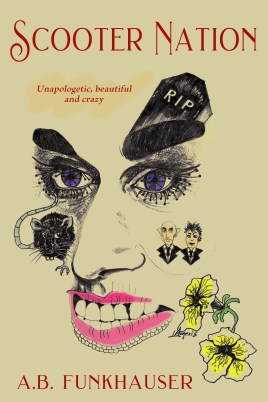 I wouldn’t presume to be on the same level as Thompson—that would jeopardize my health. But I did presume to reach the first time I took up the laptop, and I continue to do so with the newly released second edition of Scooter Nation under the Out of My Head Publishing imprint.
 couched in secrecy, funeral service, as we morticians like to call it, is carried out behind locked doors under gilded chandeliers.
 Imagine a neighborhood establishment that has been part of the street for nearly seventy years. During that time, it has seen many coats of paint and many different faces as staff cycle through with the passing years. Those on the street who do not have business with this business never venture inside. The only living beings that do, have congress with the dead.
 are inherently self-aware. Owing to the nature of their work and the long-evolved traditions that back them, they take pride in their old-fashioned livery and deep-seeded altruism that reinforces what they know well: They are doing lasting good, if only for the few short days they spend with each of the families they serve.
 The old ways teeter on the brink as big and shiny moves in. Buildings will be bull-dozed and great tabernacles will be erected to honor brand and market share. But can our brave warriors survive the gloss of bolder and greater social policy, or are they destined to disappear along with rotary dial phones and face-to-face friendships?


 There are many reasons why I decided to go indie and not one of them had anything to do with my original publisher, who was great and very supportive. In fact, if there’s anything I miss more it is the community that came along with them. So many writers came up with me and it was from one another that we learned how to write better books.




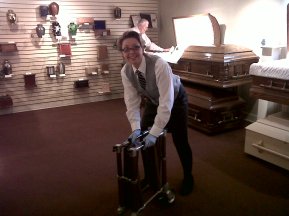 Hello, and welcome to my world. Back in 2010, I had no idea I’d be penning cross-genre novels dealing with anything from death to revenge to mail fraud. Perhaps it’s in my genes? I’m a funeral director by trade so lives lived are my primary focus, even if I like to mess my characters up a little bit along the way!
 I’m stoked, not just because the snow’s gone and I’ll soon be swimming in an ever-cleaner Lake Ontario, but also because I’m giving my old books—my companions, my darlings—the facelift they deserve.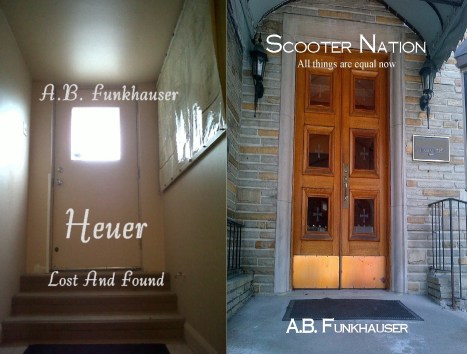





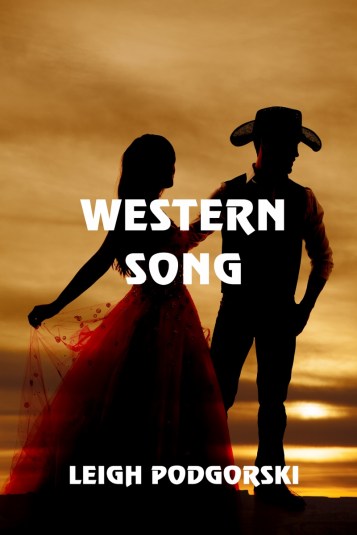 When rodeo clown Cody Goode is killed by the notorious bull, Baby Face, a maelstrom of events unfolds in the small town of Wild River, Wyoming. The arrival of Cody’s secret Thai mail-order bride Song throws it and especially Weston Beaudurant into chaos. Immigration issues and Native American gambling explode. But at the heart of this poignant tale is the love story that emerges between the lonely cowboy and lovely Thai immigrant. The novel soars with romance, rodeos, Native Americans and cowboys who ride the range, rope, and even throw punches in a quintessential barroom brawl. Complete with a diverse cast of unique characters, this American saga plays out beneath the wide Wyoming sky
  Leigh Podgorski is an award- winning playwright and screenwriter. Among her favorite projects are a play and documentary on Cahuilla elder Katherine Siva Saubel entitled We Are Still Here and the one-act play Windstorm for which she interviewed Dr. Elisabeth Kubler Ross. Leigh’s novels include The Women Debrowska that is loosely based on her own Polish ancestry, Ouray’s Peak which follows the story of one matriarchal Ute Indian lineage, and the Mystic Mystery Stone Quest series that includes Desert Chimera, Gallows Ascending, and the newly released Neuri Shape-Shifter. Her most recent novel is Western Song, published by Solstice Publishing who has published novellas My Soul to Take and The Season of the Neuri Knight as well as her short story Silent Night. Currently she is working on a murder mystery adapted from her play, Amara.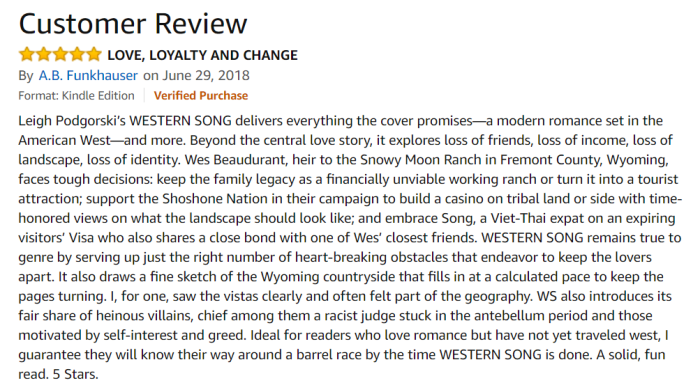

 A. B. Funkhauser, Author