

It was my great pleasure to be interviewed by Tony Eames of NF Reads, a general interest site that explores the creative process and stories behind the lives of the people who pursue it.
Past interviewees have included scientists, business leaders, health professionals, politicians, and www influencers. Learn more about NF Reads here: https://www.nfreads.com/about-contact/
The interview is reproduced below.
Please introduce yourself and your book(s)!
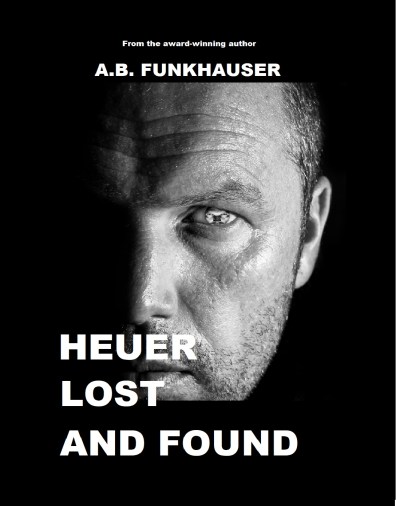
I’m A. B. Funkhauser and I’m delighted to be profiled here on NF Reads. My on-line biographies variously describe me as an outdoor enthusiast, classic car nut, mother, mortician, monkey and purveyor of gonzo mortuary revenge fiction. What that actually means is that I write blended genre fiction based on what I see and hear and then I warp and bend everything to the peril and salvation of my morally flexible characters.
I’m currently working on a series of books, some with interrelated plots, others not, each with large casts and a vaguely menacing omniscient voice to taunt and trick along the way. The common thread they all share are characters that are unapologetic and very often chaotic in their life choices. They are not wholly villains or angels but somewhere in between, and the results of their actions can only be guessed at until the last page is read. The thing I get most from readers is that while they may not like all the characters, they inexplicably find themselves rooting for them. I think that’s cool. The other draw is the setting: a funeral home over many decades with a revolving door of staff cycling through, each coping with life and death and their own well-being. A reader needn’t tackle the books in order—they stand alone. In fact, I’d recommend going at them out of order. The character that dies in book two is back alive and well (and doing a great deal of damage) in book four. That’s fun to write, let me tell you!
What inspires/inspired your creativity?
A combination of work life, family folklore and an overall love of world history collided to produce work that is equal parts dark and light. I drew a lot of inspiration from Jerry Seinfeld and Kurt Vonnegut in early days; the former writing voluminously about nothing, the latter about things both profound and irreverent. Both made anything possible in the sense that nothing was off limits and everything could be grand or ridiculous. Likewise, QuentinTarantino. His non-linear storytelling that enabled a dead character to walk away alive and well in the final act opened my eyes to all kinds of possibilities.
How do you deal with creative block?
I stop and push away from the keyboard. I can’t force it to happen. It has to appear, and it always does.
What are the biggest mistakes you can make in a book?
Rushing—Not taking the time to read it through one more time before hitting the send button and not taking the time to read it again after it’s printed. Spelling and grammar matter and it amazes me how many errors actually sneak past the spell checker, beta readers and Grammarly-type programs.
Editing while in a terrible mood—You will do more damage to a work with a fractured lens than you will after a short break. Take a week off to clear your head. The manuscript will still be there waiting for you.
Rambling on—It’s one thing if a character is fatuous in speech and manner; it’s another if the writing is. Trim those sentences. You don’t need to go on and on.
Beware the expository paragraph—There are underpinnings to every tale (the backstory) but unless it’s an essential “tell” (sometimes you just need to say it in order to get on with things) leave it to the characters to show it through action and dialogue.
Do you have tips on choosing titles and covers?
If the writer has something specific in mind, something from the gut, they probably have 50% of it right. The cover and title are not for the author but for the reader. Whether designing it yourself or choosing to go with a pro, take the time to shop the concept. Run it by the betas, your writer’s group, family, friends and CRITICS to get a temperature. And be prepared to change the cover a couple of years post pub. I’m doing that right now. What I believed to be grand and clever five years ago really doesn’t work now.
How do bad reviews and negative feedback affect you and how do you deal with them?
Criticism is essential to becoming a better writer. Trolls notwithstanding, a tough review almost always has merit. Do not rush to make changes after a heavy critique. If time allows, let it sit, let it percolate. I’ve gone back to a manuscript after a month-long break and have found that the feedback was usually correct. It’s tough to learn this, but it will save the writing.
How has your creative process improved over time?
I’m faster. The first book took five years, the second and third a year each. This is because I managed to figure out how to do it. But fast isn’t necessarily good. My next book will take longer because I’ve learned the importance behind taking the time. (See above)
What were the best, worst and most surprising things you encountered during the entire process of completing your book(s)?
One thing I’ve learned from reading Hunter Thompson’s gonzo journalism is that the best way to tackle serious issues without being preachy is by shining a light on them with humor. By creating morally flexible characters in absurd/exaggerated circumstances, I was able to get my points across without scaring the reader away. That was and continues to be the best thing.
The worst thing might have been formatting, but that gets better with practice. I’ve taught myself to like formatting by chalking it up to another opportunity to reread the text and catch those hideous spelling mistakes that spellcheck misses. Pore and pour. OMG!
The most surprising thing has been the way the work has been received to date. Make no mistake, a book is NEVER completed. It’s published, promoted, critiqued, and, if the writer chooses, improved with new cover designs, back jacket blurbs and layouts. I released my first book believing I had written a paranormal romance. It went on to win horror prizes. My second book, a sequel, won multiple humor prizes. This led me to a very valuable lesson learned: my books aren’t what I say they are but what the reader believes them to be. That journey continues to be amazing.
Do you tend towards personal satisfaction or aim to serve your readers? Do you balance the two and how?
I’m currently working on book four in my series and I still aim for personal satisfaction before getting to the business of making it accessible for readers. It’s important to me to love the book first. How else can I expect a reader to feel something similar? However, after the first, second and third draft “love-in,” I step back, wait, and read through it again to see if any of it makes sense. I clear up the vague spots, kill some darlings, and trim the back story. Then I let the betas have at it. That’s how I balance.
What role do emotions play in creativity?
A great deal, but these are tempered by structure, pacing, arc and characters. Emotions can blind and if they’re not in their place, you can wind up with a mess.
Do you have any creativity tricks?
Be honest and tell the truth in the first drafts; then decide if your truth will serve readers in a meaningful way. There’s a fine line between truth and rant. I don’t rant in my fiction, but my characters often do.
What are your plans for future books?
I have four lengthy unfinished manuscripts screaming for attention. These compete with the new work generated during NaNoWriMo. I’m currently sprucing up the back catalog with new covers and layouts and find that one in particular has inspired a return to a trunk book. It’s been collecting dust for about four years. Its time has come, I think.
Tell us some quirky facts about yourself
I write fiction but read mostly non-fiction these days.
I enjoy binge watching series from multiple genres. Netflix is my university.
I go south to the hot ocean in summer but gladly hole up with the snow in winter.
I love vintaging. I can’t remember the last time I bought something new.
When will your books be available on-line?
The first three books should be available on Amazon by mid-summer 2019. Paperback versions will follow thereafter. The best way to find out what’s going on is to visit my website https://abfunkhauser.com/

 walked through the doors of the Toronto Congress Centre with a wobbly uncertainty. I felt goddamned ashamed. After decades of self-improvement, I still felt like that kid on the playground, the one that doesn’t look right and probably never will.
 I mopped my sloppy brow. Now measuring in at 5’11,” I remembered that I’d forgotten to take my hormone pill before I left the house. I dreaded the shvitz that would surely come.
 depending on who you asked, this campaign would lead off strong with busy hands in every sphere.
 For American readers, let me tell you that Doug Ford is not new to the scene. He has had his fingers in politics and business for years, not unlike his predecessor, who was very ceremoniously dumped for social and possible financial wrong-doing just weeks ago.
 pale-faced. And he’s a dude. Who in their right mind outside of the faithful would vote for him? And wouldn’t the faithful look exactly like him?
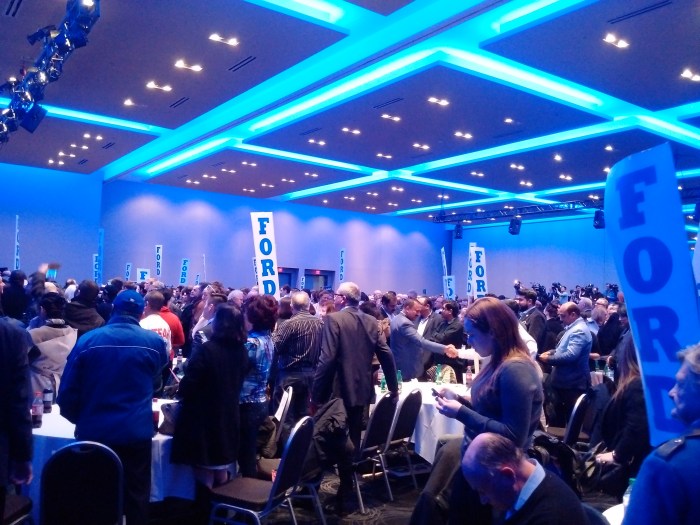 I’m on the floor now, my heels telling me that it is time. From this vantage, I can only see shoes—Dockers, Skechers, Vans, Steve Madden, Nine West—and some stroller wheels. What I don’t see are a rush of youthful feet, what we used to call (and what is probably still called) the Wedge, young Progressive Conservative Youth rushing the stage enthusiastically with lollipop signs. About the youngest I see here are late twenties but mostly early thirties, the new twenty. They cheer, they clap, but they are also composed and earnest.
 they only appear on-line or do they reserve their right to free speech for those in power? I guess I’ll find out when I visit the Preem, who’s currently busy answering questions about the Throne Speech.


 I have seen CAPTURING MARY before, so I was delighted to
 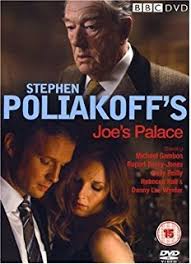 find its companion film, JOE’S PALACE, on the roster in December. Set in contemporary London, both films flash between now and “back then.” With a vacant and very smart London townhouse as the anchor, both films show how an inanimate object—the house—can be as vital and real as its carbon-based companions. I couldn’t take my eyes off it, especially when the tortured Mary (played by the intense Ruth Wilson) and her nemesis Greville took the stage to mount a cat and mouse game that left this viewer chilled.
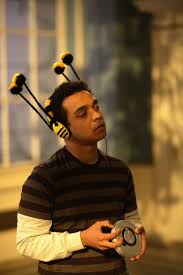 Enter Joe, a young man who works in the now vacant palace as a concierge and keeper of the building’s secrets. Joe appears innocent and unfettered, yet it’s his absence of baggage that enables him to cut through his tormented visitors and get to the truth of their pasts. The truth is ugly, but the resolution is brilliant. Absolutely brilliant.
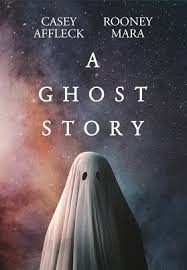 Imagine Casey Affleck mute and under a sheet with only two eye holes through which to communicate. (I checked. It was him.) A GHOST STORY is a “watching film” in that you can’t look away for a second or you might miss something. The hook of course is the notion that something silent and unseen could be wandering through your house as you sit and write or eat or sleep, and that—let’s face it—is both compelling and creepy. Affleck’s taken some personal hits over missteps settled privately, but I couldn’t let it get in the way. I couldn’t stay away. His is a stunning, soundless performance that elicited rave reviews to go with kudos for the film all around. Something different.
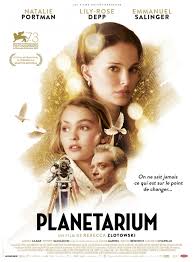 A “reading picture” if you cannot speak French, this production is luxe and takes place just before the out break of World War II in France. Natalie Portman’s “Laura” plays sister to Lily-Rose Depp’s “Kate” who is a sought-after medium in elite circles. Both sisters rely on the gift to get ahead in life, but things take a tragic turn when they become enmeshed with their patron Korben. Korben has a past that he very much wants to unlock with Kate’s help, but the results of their experiments have the unforeseen effect of releasing the full weight of Parisian society in the negative’s column. Here’s a case where the spirit world may be preferred. Visually gorgeous and somewhat long-running, it is “art house” and moody and worthy of a boo if “different” is for you.
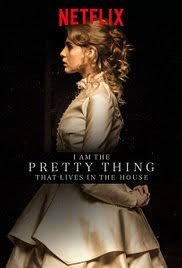 Actor Ruth Wilson again (See her in Showtime’s The Affair if you haven’t already) in a joint Canadian-American production that’s classy psych-thriller from start to finish. Throw in some Bob Balaban (right up there with Buck Henry) in a limited, but pivotal role, and you’ve got something that will freak you out with minimal effort. The scare is in Wilson’s eyes. She is a
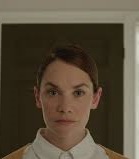 hospice nurse called in to care for dying horror author Iris Blum in a remote and gorgeous century home (trope-I don’t care) that has a lot of supernatural activity going on. Dialogue is sparse, and the scenes are CGI free with ghostly specters using more traditional (old-fashioned) tricks that blend well with this type of bare bones presentation. Just wait for the phone to fly out of Wilson’s hand.
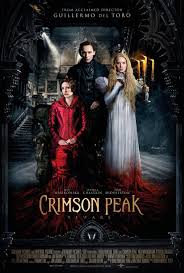 The antithesis of the film above, this beauty is a good old timey gothic horror with freaky ghosts set in an even freakier house in 19th Century England. Here, Tom Hiddleston and excellent Jessica Chastain pair up as a larcenous brother and sister seeking to bilk heiress Mia Wasikowska of her fortune and her life. As if! The heiress kicks butt without aid of 50 caliber fully automatic machine weapons or hunter killer satellites. Shot in gorgeous “Triadic” color (a go-to for director Guillermo del Toro), CRIMSON PEAK reminds me of the Technicolor films of yesterday, with frames that look more like paintings only to move like Harry Potter’s newspaper.
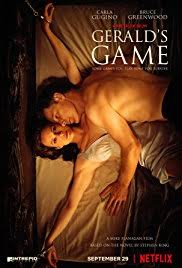 The plot description read like a BDSM cheesefest, but when I cracked into it I found it was anything but. Based on what book reviewers have called “one of Stephen King’s lesser works,” this psych horror thriller will freak you out as a viewer and have you wishing you could think that way as a writer. What’s up with the dog? Perfect for late night with the lights out, all I’ll say is that I’ve never seen actor Carla Gugino like this. (I used to watch her in Spy Kids 1,2 and 3 with the kids). This one is not for kids.
 Well, if I had any sense I’d get back to researching Book Four, but I still have a house to paint from top to bottom and there’s this little Australian series called GLITCH that keeps calling out. It’s on Netflix, of course.


 Sold into the harem by her Tatar kidnappers, 15-year-old Alexandra not only wins the favor of the Sultan (after much soul searching—she is the daughter of an Orthodox priest) but goes on to marry and live with her volatile spouse for the entire span of her life.
 know how uncommon a move like this actually was, given that sultans typically packed off their concubines with the princes they produced once the ‘young lions’ turned 16 and were deemed old enough to govern a principality of their own.
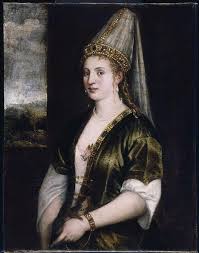 came to protecting herself, her off-spring and even her sultan. Against tradition, she became the legal wife of a king in a royal house that did not have queens, bore five sons and a daughter against the one son per concubine policy, and was laid to rest in a tomb far grander than her spouse’s and immediately adjacent to him in the
  History, without question, drew me to this story. But what keeps me there (humorous subtitles notwithstanding) is the inane and highly unusual circumstances major and minor characters alike find themselves in. What, for example, distinguishes a major execution from a minor one? How far can second concubine push her agenda when the Haseki (1st concubine) and Valide (sultan’s mom) precede her and really, really don’t like her? And how does one remove a greedy grand vizier from the picture when his friendship with the sultan borders on a bromance to end all others?
 characters feel and do in this type of genre is governed by a culture and belief system that so totally predate everything we know in the current CE that we at times question the credulity of the plot. We shouldn’t. Duking it out over who sits under the canopy is normal. Hürrem Sultan would rather commit suicide than allow a new Russian concubine into the harem and tells her sultan so with flourishing soundtrack to back her up. And she’d do it were it not for the fact that she knows him so well!
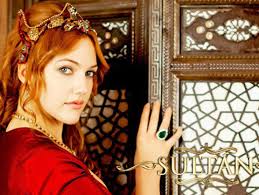 With the soap genre allowing for glacial pacing (finding the stolen ring happened over a three-episode arc) the story still grooves, thanks to ambitious characters, raucous political and personal agendas, and costuming that, frankly, thrills.

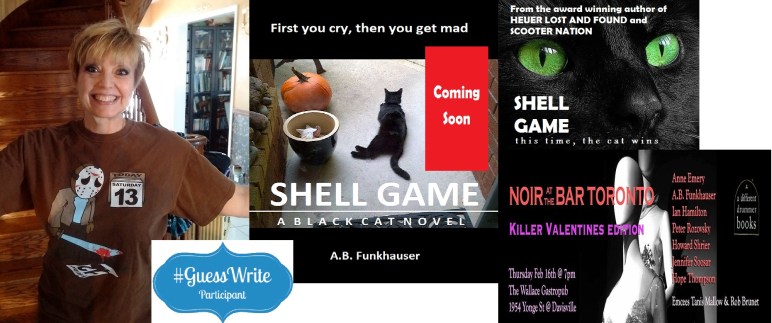
 So much has happened since the start of the year, beginning with the home stretch gallop for SHELL GAME, my third in the Unapologetic Lives Series. What began as a reaction to an aggressive letter from city hall has turned into a novel journey that examines relationships through the eyes of a feral tabby cat.
 Back in 2013, a group of crime-loving authors came together and launched NOIR AT THE BAR, an event that has spread across the country and south of the border too. The February 16 event in Toronto provided a golden opportunity to get up and read from the WIP. Was I nervous? You bet! Am I glad I did it? Absolutely! Writers Rob Brunet, Jennifer Soosar, Tanis Mallow, Hope Thompson, Ian Hamilton, and Howard Shrier shared their dark work with aplomb, along with Noir
  Founding Father Peter Rozovsky, who came all the way up from Philly to do so.
 The incredible power of
  the Twitter hashtag game cannot be stressed enough. For while the Twitterverse is huge, it lends itself to lasting relationships forged through shares, one line at a time.
 participant(s) that guess the theme share in a prize pack offered up by the hosts. It is through this that I am able to share this space with February 2017 #GuessWrite winner Tanya Chris. Tanya and I have crossed paths many times through #2bitTues #1lineWed #ThruLineThurs, #Thurds Words and many, many more. Yet it is through the shared resources of participating writer gamers that I have the honor to feature her work here.

 On the movie front, I was pleasantly surprised a couple of times. Proving once again that I am free to choose, I ignored the rhetoric surrounding Suicide Squad and went and saw it anyway. Man, am I ever glad I did. No matter how much shoot ’em up ’em’s film makers insist on serving up, nothing works better than good repartee and a STORY to go with it. Producers take note.
 With one of the hottest summers on record where I live, I was delighted to reconnect with a place long forgotten: the shores of Lake Ontario. Long seen as a place to look at water rather than wade in, I was pleasantly surprised to find environmental responsibility paying off with clean water in 2016. I went in: not once, not twice, but more times than I have in my ENTIRE lifetime (which is getting pretty long, but I don’t dwell on that!) Bravo to the good people who persevered all of those years and got at least some of our beaches cleaned up! Salutes all around.


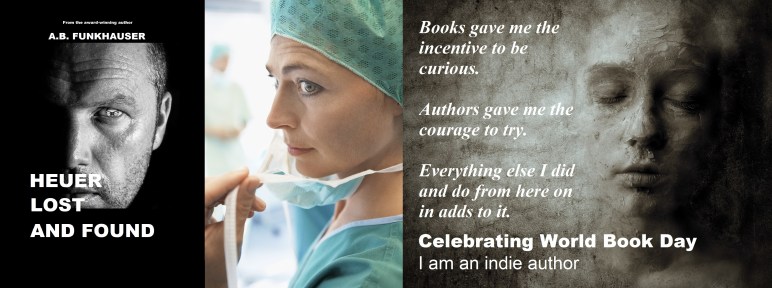
 released two more books in the Unapologetic Lives series. SCOOTER NATION follows up with the erstwhile and chemically-dependent funeral directors at Weibigand Brothers Funeral Home as they combat a mendacious sybarite hell-bent on remaking the business.
  SHELL GAME, released in September 2017, goes outside Weibigand’s to examine a seemingly pastoral community with a lot to hide. When an ethereal black cat is kidnapped by a feline fetishist sex cult obsessed with film auteur Pilsen Gudderammerung, society must choose between moral or physical gentrification.









 A. B. Funkhauser, Author