VICTORY LAP? FIRST REVIEWS ARE IN

There’s that old saying that one must never put the Lord Robertcart before the horse, so what if I just leave the cart at home and carry on? First reviews for HEUER LOST AND FOUND are in and so far, THEY’RE GOOD. So I think I will leave the cart at home and have a once around. As Lord Grantham would say: “Steady On”.

FIVE STARS

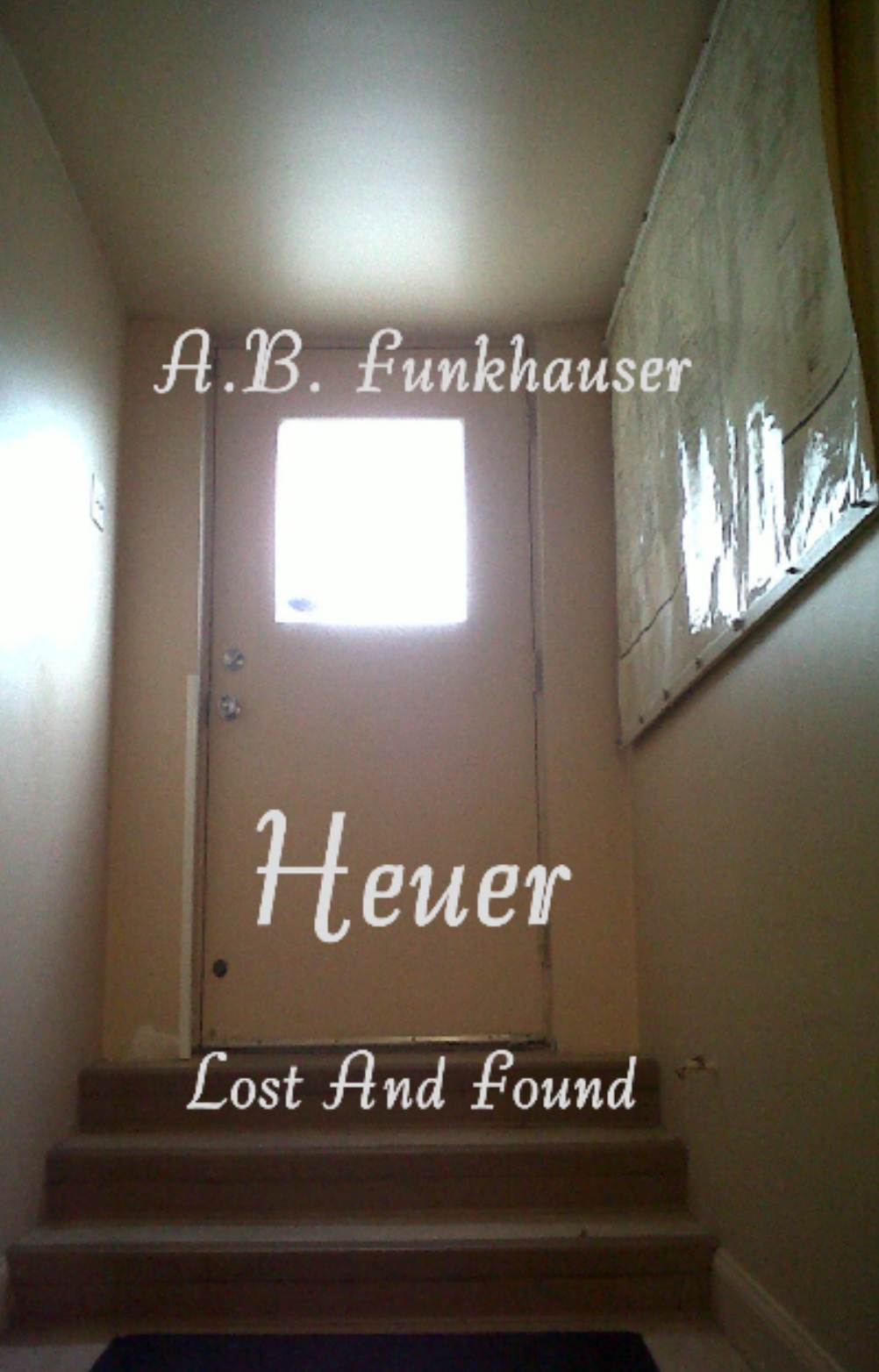
Heuer Lost and Found - PrintEvery now and again you come across a treat and this book was as good as chocolate, mostly because of its originality. It takes a serious premise and gives it a light touch. The author is a word technician. The unusual catalyst? We have a man who dies but is still extremely vocal and active. But if his experiences beyond the Grim Reaper are typical, then I advise you, new readers, to stay in this life – or find some parallel universe.The writing style is racy with no words wasted. Early example: “May had given over to June with its outdoor patios and brain blasting surround sound systems—zesty realities that didn’t always mesh with work.” Midway example: “A tall lamp of ancient origin flickered in a large room ahead of him. Piled high with boxes and debris—a compendium of past lives—the space reminded him of a place he’d just come from and was not anxious to see again.” Late example: “Heuer looked at his smooth hands—a musician’s hands—with their perfectly tapered fingers filled with music that went unplayed. Peace? There was no peace to be made with Werner.”
It’s all tidily edited and I didn’t keep tripping over typos.
The characters are painted clearly right from the start, not in laborious detail, but in the little hints and the ways in which they do things.
A lot of care, background knowledge and zest with the pen has gone into this book.
—David K. Bryant, Author, Tread Carefully on the Sea
FIVE STARS
This beautifully written, quirky, sad, but also often humorous story of Heuer and Enid – one living and the other a spirit stuck between this world and the next – gives us a glimpse into the fascinating, closed world of the funeral director. Years after their relationship ended, the past catches up to both of them in the most unlikely place – the funeral home. Fresh writing filled with rich vocabulary, this story features a vivid cast of colourful, living-breathing characters. This one will keep you reading late into the night until the final page.
—Yvonne Hess, Charter Member, The Brooklin 7
FIVE STARS
Ms. A.B Funkhauser is a brilliant and wacky writer incapable of dumbing things down and amen for that. Her distinctive voice tells an intriguing story that mixes moral conflicts with dark humor, not too mention booze and cigarettes.

The book’s title refers to the lead character, a lawyer who dies in his home. As the body decomposes, the man’s spirit experiences euphoria, rage, disappointment and eventually hope. One of my favourite characters Enid, an employee of the Weibigand Brothers Funeral Home where Heuer now resides just happens to be Heuer the dead lawyer’s former girlfriend, and as we re-live the flawed recollections of their murky past—it really poses the question. How do we deal with death?​

—Rachael Stapleton, Author, The Temple of Indra’s Jewel and Curse of the Purple Delhi Sapphire
FIVE STARS
The macabre black comedy Heuer Lost And Found, written by A.B. Funkhauser, is definitely a different sort of book! Her protagonist Heuer dies but his spirit hangs around as he waits for his body to be collected a week later from his dirty, litter strewn flat. In the funeral home, ready to be embalmed, he finds out it’s an ex-girlfriend, now alcoholic, who will do the process. Add to that a talking rat…
You will enjoy this book with its mixture of horror and humour.
—Diana Harrison, Author, Always and Forever
FIVE STARS
Heuer Lost and Found is a quirky and irreverent story about a man who dies and finds his spirit trapped in a funeral home with an ex-lover who happens to be the mortician. He has to come to terms with his hoarding, degenerate past before he can escape. I love the character of Heuer, the Lawyer. He’s not a loveable character, but he’s as fascinating as watching a bug under a microscope. I found myself rooting for the guy, which is always the mark of a strong character. The characterization is rich the story well-told.
—Cryssa Bazos, Writer’s Community of Durham Region, Ontario, Canada
FIVE STARS
Author A. B. Funkhauser strikes a macabre chord with her book “Heuer Lost and Found”. Written from the perspective of an undertaker, she gives her readers a ringside seat at the Weibigand Mortuary where Enid, a middle aged woman with a taste for scotch, arrives on a Monday morning still in a stupor from the night before. Initially, the reader learns a bit about Enid and the history of the mortuary, its original owners and their heirs who continue to operate the family owned business, along with all of its eccentric employees. Early in the day, a call is received and there after a not so typical day in the life of a mortuary begins. Heuer, a well known middle aged attorney has been found dead in his apartment, where he laid for several days. The story now moves between present day and flash backs to a time when Heuer, Enid and others in the story are intertwined in one way or another. Heuer appears as a ghostly spectre to enchant us with his own take on his past, and his current impressions of what is being said and done as his body is prepared for burial. I for one like this book. I found it to have a similar feel to the HBO series “Six Feet Under”.
Ms. Funkhauser is a wizard with words and did a fine job of weaving this story of Greek, German and English speaking families that bounced back and forth throughout the entire book.
—Young, Author, A Harem Boy’s Saga Vol I, II, and III
FIVE STARS
Heuer’s difficult relationship with women and his mother seems to be a focal here, but so are references to friendship, loneliness and feelings of inadequacy. The irony that it’s an old girlfriend with a ton of problems taking care of him as his funeral director, is startling. The author depicts the flaws and human nature in both characters. This book is an incredible read that does not allow the audience to “fall asleep” at any time. A MUST READ!
—Daisy Kourkoulakos, Mississauga, Ontario
FIVE STARS
Not really horror or occult, this book mixes soul searching with some pretty off the wall humour. When a lawyer dies in his home with his spirit body for company, he must pass the time reminiscing with the walls while learning to move objects with his mind. Once his body’s found by a sexy coroner he madly wants to date, he finds himself stuck at a funeral home with a bunch of odd strangers including an ex girlfriend who likes to drink. What does a guy have to do to get on with his after life? Scaring the crabby neighbor is a start. I enjoyed this book because it’s extremely witty and the characters do really unexpected things like house breaking and scaring mourners at funerals. Perfect for anyone who likes gallows humour!
—Suzanne Fairbrass Stacey, Lake Simcoe, Ontario
FIVE STARS
Having received my copy of the work personally from the author, the first thing I have to mention, is that although not my usual cup of tea, but Heuer Lost and Found, is without a doubt a great story to get into and stay captivated by.

The setting may seem a little unorthodox and considered slightly macabre, but that is what made this work. This is a story that to me, felt like it abides by its own set rules and the pace is brilliantly maintained by the ever wordy A.B. Funkhauser. Even with an extensive vocabulary, the variety of words used were more of a pleasure than a pain and reminded me of the works by Bram Stoker, a personal favourite author of mine.

The story is lovingly crafted and is full of noteworthy lines that just stick in the memory, such as the phrase: Was sein wird, wird sein und was hineinschaut, schaut auch wieder raus—What will be, will be, and what looks in, looks out.

And if that’s not enough to entice, maybe the ensemble cast of Enid, Charlie, Clara is. A trio who although feel like a mix-matched bunch that shouldn’t be in each others lives, author Funkhauser bound them together just so.

For a story centered around death, it is full of Life.

—Rocky Rochford, Author, Rise of Elohim Chronicles
FOUR STARS
I didn’t know what to make of this at first, and then I was half way through it, and then I was at the end…but I didn’t want it to be over. Funkhauser made me learn new words like “aegis” and then I was laughing too hard to notice that I was actually at a sad part. Like Breaking Bad’s Walter White, Heuer is not a likeable man, but I somehow found myself rooting for him. A strange, complicated character. I have to look at him again. I hope there’ll be more where this came from!
—Kasey Balko, Pickering, Ontario
FIVE STARS
Multifaceted characters layered into a modern plot with plenty of sub cues based in the past. Heuer and Enid in their own way are similar so it makes sense that they’d come together again even if the circumstances are strange. Though spirit and funeral director never meet face to face, their simpatico is strong and their conversations are heartbreaking and real. The staff at the funeral parlour are good for laughs! Charlie, Dougie and poor old Robert the intern, who has to put up with a lot, break the tension and keep this thing rattling to a poignant conclusion.
—Dawn-Jane Dusomos-Guay, Cornwall, Ontario

What a great start to a blog tour!

THE FUNKHAUSER ROAD SHOW BEGINS APRIL 20 WITH AN INTERVIEW AND REVIEW AT http://shylawolff.blogspot.com/

Heuer Lost and Found Banner 540 x 200

ON PROVENANCE: WHAT MAKES HEUER TICK

Who we are and what we are depends on how honest we choose to be. At least that’s how my character Jürgen Heuer (pronounced ‘lawyer’) likes to play it out in life and death. Born in Bremen, Germany with summers spent in the Austrian Tyrol he is literally preprogrammed to be a romantic.

His mother, a dreamer raised on Schumann, palinka shots and weeping Hungarian violins demands it. “Love, my love, and desire—Sensucht—longing: These are the things that make the history, the things upon which great legends are built. Without these, you have dust in your mouth.”

wandern

Yet Heuer’s love for things musical “the cicada’s song” or lyrical “… her tangs of violet commixing with scents of must, like the old place back home in Europe” are squelched by history and a profound belief that he is “born bad” and cannot undo it.

“Small, both in mind and body, he had tremendous appetites, all of which skewed towards becoming more than what he actually was.” An apropos description not of the man, but of the father, Werner, whose tastes “… classic in [their] narcissism, embraced the moldy old ethos of ethnicity over geography, and, as such, he was first in line when Anschluss came to Vienna…”

anschluss1

Werner Heuer has no time for art or music: “For him, the rhythmic tapping of jackboots on pavement went beyond forced occupation; it was the end of the road after a long trek.”

Eschewing his parents’ hang-ups, Heuer does his best to build a life in America that is, by all accounts, immensely successful and hardly lonely. But it is contrived. Dodging promotion, cruising the outer banks that frame society, he keeps to himself, except when he toys with the lives of others. When a young colleague joins the firm Heuer takes action, not swiftly, but slowly, the way he likes it: “The decision to ruin a young man half his age was taken lightly and on purpose, as if giving weight to the decision conferred unjust power on the youth. To Heuer, it was personal, but also a test to see if he could actually do it.”

All business, Heuer reminds me of another character, Irmtraut Weibigand, currently under construction in POOR UNDERTAKER, a work in progress. A woman of business, she wrestles with secret doubts about the veracity of her citizenship, place in the community, and the integrity of the people she tries to call friends. A raucous Chamber of Commerce luncheon exacerbates this, when she rises in defense of her frenemy Hartmut Fläche, whose effete manners and pomposity alight the simmering hatred of fellow Chamber member Conrad Hickey. Defending Fläche’s right to exist, Irmtraut loses her cool as she’s reminded that she’s as ‘foreign’ as he is even though she has been a part of the community for nearly thirty years. Well read, she cannot help but think of Shakespeare’s monster Caliban from the Tempest making a subtle but conscious comparison to her own place on the ‘island’ that is Portside, Michigan. Thinking back to her mother, her provenance and her roots, she is cut at the knees, reminding herself that no matter how fine she becomes, she will always wear homespun.

Like Irmtraut, like Werner, Heuer wrestles with his identity which takes centre stage anno domini. His inane Germanity  no longer an issue, Heuer wishes only to be cared for and remembered.

FOLLOW THE BLOG TOUR BEGINNING APRIL 20 THRU MAY 18

Heuer Lost and Found Banner 540 x 200

bewitching_header

http://bewitchingbooktours.blogspot.ca/

HEUER LOST AND FOUND: THE EXCERPT

“Come with me, and I will show you worlds.”


At last, HEUER LOST AND FOUND is ready to go with presales beginning March 26 to the launch on April 23rd on Amazon. It’s been a long, exciting journey marked with encouragement and a lot of learning. I’ve made so many friends along the way, so much so that I owe this space and the people that help fill it a special nod all their own. In the coming days, I’ll be talking up my ladies in the Brooklin 7, my incredible sister and authorly inspiration Cryssa Bazos, and long time friends Gilda Heinrich Rousseau and Suzanne Fairbrass Stacey. I will also pay homage to the crew at the Wine Rack, the guys on the Canadian Poncho Car site, and the amazing staff at the Pickering Metro; all of whom make stepping out the door an adventure. Thank you. I’d be remiss if I didn’t mention Solstice Publishing, it’s staff—who are also writers—and the amazing authors I’ve grown close to as a member of the Solstice Family. All in due time. Today, is for every person I’ve spoken to who expressed interest in HEUER LOST AND FOUND. I owe you an excerpt.

Chapter Two

Two Weeks Ago

The house, like the man who lived in it, was remarkable: a 1950s clapboard-brick number with a metal garage door that needed serious painting. Likewise, the windows, which had been replaced once in the Seventies under some home improvement program, then never again. They were wooden and they were cracked, allowing wasps and other insects inside.

This was of little consequence to him.

The neighbors, whom Heuer prodigiously ignored, would stare at the place. Greek, Italian, and house proud, they found the man’s disdain for his own home objectionable. He could see it on their faces when he looked out at them through dirty windows.

To hell with them.

If the neighbors disapproved of the moss green roof with its tar shingles that habitually blew off, then let moet_champagne_partythem replace it. Money didn’t fall from the sky and if it did, he wouldn’t spend it on improvements to please strangers.

They were insects.

And yet there were times when Jürgen Heuer was forced to compromise. Money, he learned, could solve just about anything. But not where the willful and the pernicious were concerned. These, once singled out, required special attention.

Alfons Vermiglia, the Genovese neighbor next door, had taken great offense to his acacia tree, a towering twenty-five foot behemoth that had grown from a cutting given to him by a lodge brother. The acacia was esteemed in Masonic lore appearing often in ritual, rendering it so much more than just mere tree. In practical terms, it provided relief, offering shade on hot days to the little things beneath it. And it bloomed semi-annually, whimsically releasing a preponderance of white petals that carried on the wind mystical scent—the same found in sacred incense and parfums.

What horseshit.

It was a dirty son of a bitch of a tree that dropped its leaves continuously from spring to fall, shedding tiny branches from its diffident margins. These were covered in nasty little thorns that damaged vinyl pool liners and soft feet alike. They also did a pretty amazing job of clogging Alfons’ pool filter, turning his twenty-five hundred gallon toy pool green overnight.

This chemistry compromised the neighbor’s pleasure and it heightened his passions, blinding Alfons to the true nature of his enemy. He crossed over onto Heuer’s property and drove copper nails into the root system. It was an old trick, Byzantine in its treachery; the copper would kill the tree slowly over time leading no one to suspect foul play.

weird vistaBut Heuer was cagey and suspicious by nature, so when the tree displayed signs of failure, he knew where to look.

The acacia recovered and Alfons said nothing. Heuer planted aralia—the “Devil’s Walking Stick”—along the fence line and this served as an even thornier reminder that he knew. And if there was any doubt at all, he went further by coating his neighbor’s corkscrew hazel with a generous dose of Wipe Out.

Intrusive neighbors and their misplaced curiosities were, by turns, annoying and amusing and their interest, though unwanted, did not go unappreciated. The Greeks on the other side of him weren’t combative in the least and they offered gardening advice whenever they caught him out of doors. The man, Panos, talked politics and cars, and expressed interest in the vehicle that sat shrouded and silent on Heuer’s driveway. He spoke long and colorfully about the glory days of Detroit muscle cars and how it all got bungled and bargained away.

Detroit GTO“They sacrificed an industry to please a bunch of big mouths in Hollywood,” Panos would rant in complete disregard for history: Al Gore and Global Warming didn’t kill the GTO; the OPEC oil crisis did. But there was no point in telling him that.

Panos was an armchair car guy and incurable conspiracy theorist. He also kept to his side of the fence, unlike his wife, Stavroula, who was driven by natural instinct. Not content to leave an unmarried man alone, she routinely crossed Heuer’s weedy lawn, banging on the door with offers of food and a good housecleaning.

Heuer had no trouble accepting her cooking. But he declined her brush and broom. Was it kindness, or was she trying to see inside? He suspected the latter.

No one was ever seen entering Heuer’s house and while this piqued public interest, he never gave in, not even to those who were kind to him. He liked Panos and Stavroula and he regretted poisoning their cat.

But not enough to let them in to his home.

Others on the street had less contact with him. Canvassers at election time would disturb him, in spite of the lawn sign warning the solicitous away. That this didn’t apply to neighbor kids brave enough to pedal cookies and magazine subscriptions in spite of the sign, was a testament, perhaps, to some residual soft spot in his heart that endured.

Even so, he knew that people talked about him and, frankly, he had trouble accounting for their fascination. Short, curt, bespectacled, he courted an ethos that favored enforced detachment. When people got close enough to hear him speak, they detected a trace of an accent. Now faded after years of U.S. residency, his speech still bore the unmistakable patterns of someone undeniably foreign. Elaborate, overwrought and heavy on the adverbs, he spoke very much like his neighbors. Yet the distance between them was incalculable…

***

Day 1: Post Mortem

Heuer shook his head, finding it especially odd that he would think of such things at this particular moment. The circumstances, after all, were beyond peculiar. Coming out of thick, dense fog, standing upright, looking wildly around, and having difficulty comprehending, the last thing that should trouble him was human relations.

The man on the floor would have agreed, had he not lacked the resources to speak.

Heuer canvassed his surroundings. The room, still dark, the shades drawn, and the plants Stavroula forced on him, wilted and dry, bespoke of an unqualified sadness. His computer, left on and unattended, buzzed pointlessly in the corner, its screen saver, a multi-colored Spirograph montage, interspersed with translucent images of faceless Bond girls, twisting ad infinitum for an audience of none.

Back StairWhat happened here?

The bottle of Johnnie Black lay open and empty on the bedroom floor, along with a pack of Marlboro’s, gifts from an old friend. The desk chair lay on its side, toppled, in keeping with the rest of the room. His bed sheets were twisted, the pillows on the floor, and there were stains on the walls; strange residues deposited over time representing neglect and a desire to tell.

He looked down at his hands. They kept changing; the veins, wavy, rose and fell like pots of worms.

Trippy.

There was no evidence of eating, however, and this was really weird, for it was in this room that Heuer lived. Flat screens, mounted on the ceiling and on the desktop, kept him in line with the world outside in ways that papers could not. Screens blasted twenty-four and seven with their talking heads and CNN, whereas papers were flat and dirty, suitable only for the bottoms of bird cages. He cancelled the dailies first and then the weeklies, seeing no value whatever in printed words.

Pictures were another matter. Several in paint and charcoal and sepia covered the walls and floors. He loved them all, and he stared at them for hours when he pondered. His beer fridge, humidor, and model rocket collection completed him; housing the things he loved, all within perfect reach.

His senses, though dulled, honed in on a scent, distant yet familiar, coming from inside the room. It was bog-like-foul like a place he’d visited long ago, buried under wood ash. He frowned.

What was the last thing he ate? Did he cook or go for takeout? He wanted to go down to the kitchen to check, but found, to his astonishment, that he could not get past the doorframe into the outer hall.

Nein, das kann nicht sein!—Now this is not right!—he fumed, switching to German. He would do this whenever he encountered static. The spit and sharp of it forced people back because they could not understand what he meant.

Unballing his fists he felt his chest, registering the sensation of “feel”—he could feel “touch,” but he could not locate the beating heart. Consciously knitting his brows, he considered other bodily wants, his legal mind checking and balancing the laws of nature against the laws of the impossible. He could not, for example, feel “hunger” and he wasn’t dying for a drink either.

Was this a mark of passage into the nether? The man on the floor had no comment.

He thought about his bowels and if they needed attention, but that, to his great relief, no longer appeared to matter. Regularity, in recent years, wasn’t all it was cracked up to be. When he was young, he reveled in a good clean out after the morning coffee because it reset his clock and established the tone for the rest of the day. Not so latterly. His prostate had kept its promise, letting him down, enlarging, pressing where it ought naught. Awake most nights, he lost sleep and dreams.

With this in mind, he bounced up and down on the soles of his expensive shoes in an effort to confirm if he was awake or not. Perhaps he was sleepwalking, or heading off to the can for another urinary evacuation that wouldn’t come?

The man on the floor ruled out these options.

He tried the door again, and again, to his dismay, he could not leave.

What to do? What to do?

‘I think, therefore I am,’ went the popular saying, but what good was ‘being’ when one was confined to a bedroom like a rat in a cage?

He struggled to remain calm, just as he became aware of that heavy oppressive feeling one gets before receiving bad news. Pacing back and forth across the ancient floorboards in the house he was born into, he checked for the kinds of incriminating evidence the court of public opinion would hold against him once found. Pornography, loaded handguns, too many candy wrappers all had to be dispatched before someone inevitably broke the door down.

As light turned to dark and day gave over into night, Heuer’s thoughts came faster and faster, in different languages, interspersed with corrugated images, accompanied by generous doses of Seventies rock; a fitting sound track for the old life, now ended.

He fell to his knees. Somewhere in this mélange was something to be grateful for and with time, he was sure, he would figure out what that single, great, thing might be. For now, all he could really do was take comfort in the fact that his death had been perfect.

***

See the first trailer  https://www.youtube.com/watch?v=f3beUBWf2CQ

Definitely see the NEW ONE

Interview Part 1: https://www.youtube.com/watch?v=g2yhaXfh-ns

Interview Part 2: https://www.youtube.com/watch?v=WoPthI1Hvmo

BUY LINKS:

Preorder Link: http://www.amazon.com/s/ref=ntt_athr_dp_sr_1?_encoding=UTF8&field-author=A.B.%20Funkhauser&search-alias=digital-text&sort=relevancerank

Amazon Link: http://www.amazon.com/Heuer-Lost-Found-B-Funkhauser-ebook/dp/B00V6KLAMA/ref=sr_1_1?s=digital-text&ie=UTF8&qid=1427367625&sr=1-1&keywords=heuer+lost+and+found

Book Goodies: http://bookgoodies.com/a/B00V6KLAMA

Thank you. 🙂