GUILTY PLEASURES: THE ONE’S THAT STICK

Many years ago, I hooked into a public television series that brought to life the detective novels of Dorothy

Ian Carmichael as Lord Peter Wimsey

L. Sayers. WHOSE BODY? CLOUDS OF WITNESS and UNNATURAL DEATH to name a few brought we, the devotees of Masterpiece Theatre and MYSTERY!, face to face with an immaculately dressed, preternaturally wealthy English nit named Lord Peter Wimsey. Fussy, feckless and a bit grating in his dedication to detail, he was the ideal sleuth, rambling freely against a background of country houses, ornate gardens and immaculately tended lawns. Fans couldn’t get enough of him and neither could his creator Sayers, whom aficionados said was actually in love with her creation.

Lord Peter might not be my type, but I certainly get the notion of a writer getting more out of the character than mere words on the page.

A lot of people have asked me where Jürgen Heuer comes from, and my answers vary, depending on my mood. Yes, he’s a work of fiction, but every fiction, to paraphrase Ian Fleming, “is precedent on some kind of fact.”

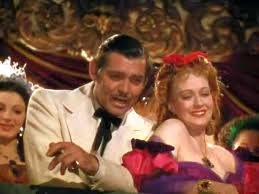
Rhett and BelleHeuer, like Sayers’ Wimsey, is incredibly real, although I doubt very much either she or I would make it through a meal with him without an outburst or two. Maybe it’s a condition of what inspires. The bad, the badder, the really, really broken. Good guys—perfect guys—just don’t pack the same punch. Heck, even Rhett Butler hung out at Belle Watling’s house of extraordinary extra circular activities, and NOBODY held that against him.

I did not set out to warp Heuer as much as I did. In fact, he plays rather nicely in the opening chapters of THE HEUER EFFECT which traces his early life. But there was something about the later man, the mature man, that courted the darkness. He’s been through the wars and has been affected by them, such that he screamed “go darker” and so I did.

simcoeThe idea that the bad side of a character is more compelling than the good follows me to this day: The anit-appeal generated by the real life figure of Capt. John Graves Simcoe on AMC’s excellent TURN: Washington’s Spies, is a case in point. Excellently portrayed by actor Samuel Roukin, Simcoe wreaks havoc among Republican forces in Setauket Long Island, hangs innocents without a blink, and composes creepy love sonnets to a winsome lass who’d shoot him herself if she could. And all the while, the lanky red coat finds time to prep for higher office north of the border as the First Lieutenant Governor of Upper Canada. (True stuff and crikey, we even named a lake and a civic holiday after him.)

It’s not the rich sets, protagonists and dialogue that brings me back. It’s Simcoe, and it pains me to say so.

Likewise, there’s the affable, ne’er do well Saul Goodman from BETTER CALL SAUL, another AMC sauloffering on hiatus after just ten episodes. Unlike Simcoe and Heuer, Saul is sweet, rubber faced and apologetically dishonest. With every bad deed, Saul struggles to do good and we love him for it. But each time he backslides into the old life—that of Slippin’ Jimmy from Cicero, Illinois—we’re on our feet, cheering. Shame we know how it ends: Saul is a prequel to BREAKING BAD. But the end’s not the point. It’s the “how” of the getting there that does it.

Heuer’s story isn’t over yet. The third book in the series “Unapologetic Lives” offers hope. But given this writer’s penchant for her creation, redemption is highly unlikely.

Salut, D.L. Sayers

ON PROVENANCE: WHAT MAKES HEUER TICK

Who we are and what we are depends on how honest we choose to be. At least that’s how my character Jürgen Heuer (pronounced ‘lawyer’) likes to play it out in life and death. Born in Bremen, Germany with summers spent in the Austrian Tyrol he is literally preprogrammed to be a romantic.

His mother, a dreamer raised on Schumann, palinka shots and weeping Hungarian violins demands it. “Love, my love, and desire—Sensucht—longing: These are the things that make the history, the things upon which great legends are built. Without these, you have dust in your mouth.”

wandern

Yet Heuer’s love for things musical “the cicada’s song” or lyrical “… her tangs of violet commixing with scents of must, like the old place back home in Europe” are squelched by history and a profound belief that he is “born bad” and cannot undo it.

“Small, both in mind and body, he had tremendous appetites, all of which skewed towards becoming more than what he actually was.” An apropos description not of the man, but of the father, Werner, whose tastes “… classic in [their] narcissism, embraced the moldy old ethos of ethnicity over geography, and, as such, he was first in line when Anschluss came to Vienna…”

anschluss1

Werner Heuer has no time for art or music: “For him, the rhythmic tapping of jackboots on pavement went beyond forced occupation; it was the end of the road after a long trek.”

Eschewing his parents’ hang-ups, Heuer does his best to build a life in America that is, by all accounts, immensely successful and hardly lonely. But it is contrived. Dodging promotion, cruising the outer banks that frame society, he keeps to himself, except when he toys with the lives of others. When a young colleague joins the firm Heuer takes action, not swiftly, but slowly, the way he likes it: “The decision to ruin a young man half his age was taken lightly and on purpose, as if giving weight to the decision conferred unjust power on the youth. To Heuer, it was personal, but also a test to see if he could actually do it.”

All business, Heuer reminds me of another character, Irmtraut Weibigand, currently under construction in POOR UNDERTAKER, a work in progress. A woman of business, she wrestles with secret doubts about the veracity of her citizenship, place in the community, and the integrity of the people she tries to call friends. A raucous Chamber of Commerce luncheon exacerbates this, when she rises in defense of her frenemy Hartmut Fläche, whose effete manners and pomposity alight the simmering hatred of fellow Chamber member Conrad Hickey. Defending Fläche’s right to exist, Irmtraut loses her cool as she’s reminded that she’s as ‘foreign’ as he is even though she has been a part of the community for nearly thirty years. Well read, she cannot help but think of Shakespeare’s monster Caliban from the Tempest making a subtle but conscious comparison to her own place on the ‘island’ that is Portside, Michigan. Thinking back to her mother, her provenance and her roots, she is cut at the knees, reminding herself that no matter how fine she becomes, she will always wear homespun.

Like Irmtraut, like Werner, Heuer wrestles with his identity which takes centre stage anno domini. His inane Germanity  no longer an issue, Heuer wishes only to be cared for and remembered.

FOLLOW THE BLOG TOUR BEGINNING APRIL 20 THRU MAY 18

Heuer Lost and Found Banner 540 x 200

bewitching_header

http://bewitchingbooktours.blogspot.ca/

Hitting the road, Funkhauser wonders: How gonzo can you go?

In a little under a week, I’ll be blog touring all over continental North America. What this means is that I’ll be answering a barrage of questions about what makes me tick and how much, if any of it, winds up in my characters. I’ve already proven that I can get inside the head of a rat, so I suppose anything is possible, non? But what is psyching me a tad, are some of the insights culled out of thin air, like they were there all along just waiting for an opportunity to be heard. 

Author, friend and fellow Brooklin 7 alumna Connie Di Pietro offered one such opportunity when I dropped by her blog, a macabre place stocked with plenty ‘o bone chilling literary cocktails guaranteed to make you freeze.

“You have described your writing style as gonzo” Connie, asked. “Can you describe what that means.”

Yikes! I’d rather share my grandmother’s recipe for Hungarian gulash. But seeing as I was on the spot, I took my best shot, and I didn’t even have to cheat with Google.

A Chat With Connie Di Pietro, Queen of the Macabre

Connie Di Pietro's first novel, Daughter of God, is featured in excerpted form on her blog.
Connie Di Pietro’s first novel, Daughter of God, is featured in excerpted form on her blog.

You went from politics to funeral director to author. Can you tell me how the previous two paths led you into writing?

It’s kinda like all roads leading to Whittamore’s berry farm in Durham Region. When you have something ‘good’ it won’t keep. It just draws you there. Every job I had informed the next one, until I wound up at my dining room table cranking out fiction. The sum total of all of my experiences simply outgrew my grey matter. I couldn’t house it anymore, so I started to write it down.

How much time do you dedicate to your craft?

When I was working full time at the funeral home, I wrote by night, which meant that for about two and a half years I was flying on four hours sleep. This, I think, accounts for some of the mangier dream sequences and the ability of some characters to see in the dark. Now that I’m on hiatus, I treat this as I do any job: I get the family out the door and am at my desk from 8 a.m. until 3 p.m. Monday to Friday. Whether I’m blogging, tweeting, promoting myself or others, or working on the latest in the series, I am always up to something.

You have described your writing style as gonzo. Can you describe what that means?

prickly 1 - CopyLook at the lady in the hat…that’s pretty gonzo! Now, I could cheat and Google a definition for you, but I won’t. In my own words, gonzo is a recognized literary style

You have to read it a few times and even then you may not believe it.

created by the late Hunter S. Thompson, whose fantastical non-fiction embraced whimsy, absurdity, political activism and out and out civil disobedience where necessary. For quick reference, I recommend two films: The Rum Diary and Fear and Loathing in Las Vegas, both starring Johnny Depp. Amidst all the chaos, you will see a clear message, like an Aesop Fable. So while gonzo may appear comedic, it is actually pretty serious stuff…only, you may not know it until much, much later. 😀

Tell us about your latest book Heuer Lost and Found. What was your inspiration?

Heuer Lost and Found is a metaphysical journey of two people: one living, one dead. In an elevator I would say that it’s about a dead cooze hound lawyer trapped in an idiosyncratic funeral parlor who relies on a boozy undertaker and a smart alecky spirit guide to set him free.

Vonnegut made even the strangest things humorous.

Inspiration? Wow…if I continue from the previous question, I’d say that Hunter S. was clear and present every step of the way along with the great Kurt Vonnegut. While I didn’t attempt consciously to mimic, I would call upon their inane sense of the ridiculous when negotiating heavy subjects. Humor in a tough spot as theme, trope, what have you, was first in line. Next, there were some old bones of contention I’d been chewing on for about thirty years: 1) the notion that nostalgia hurts more than it helps 2) the idea that kindness can be found in the oddest places 3) prying is a lousy thing 4) some things don’t need answers 5) insular people will, sooner or later, give in to others because we are social and 6) find that thing you need, then let it go to keep it forever. Yep. These needed addressing, so I did it through ‘Heuer’.

What has been the most challenging part of writing Heuer

Letting go. He’s been in my head for over five years. We were getting quite comfortable.

What are you currently working on?

Heuer Lost and Found is the first in a six volume series called “Unapologetic Lives”. The fourth in that series POOR UNDERTAKER is my mission now. It begins in 1947. Funny how I seem to be moving backwards. 😀

Who do you read?

I’ll list what’s on my work table right now:

The Essential Anne Wilkinson, Selected poems by Ingrid Ruthig

The Curse of the Purple Delhi Sapphire by Rachael Stapleton

Greek Tragedies Edited by David Grene and Richmond Lattimore

Will Rogers, Wise and Witty Sayings Of a Great American Humorist

The Republic and The Laws by Cicero

Reminiscences by Gen. Douglas MacArthur

How Not to Lose a Librarian by Sherrry Loeffler

You Shall Know Our Velocity by Dave Eggers

And the excellent pamphlet “The Dignified Transfer and Post-Organ Harvested Embalming and Preparation” from MacKinnon and Bowes Ltd., Toronto.

Thanks doll!

Thank you, Connie. 

For more Connie, visit her website http://www.conniedipietro.com/

Heuer Lost and Found Banner 540 x 200

The Funkhauser Road Show hosted by Bewitching Book Tours kicks off April 20th. Dates and stops to be posted shortly.

bewitching_header

Can a fly interview a rat? Malay Upadhyay thinks so. Funkhauser doesn’t argue.

It was with great pleasure that I appeared recently on fellow Solstice author Malay Upadhyay’s blog AUTHORZ & CHARACTERZ in support of the upcoming release of HEUER LOST AND FOUND. Photo - Malay UpadhyayYou may recall that Malay was featured here recently to promote his work Kalki Evian: The Ring of Khaoriphea. Like yours truly, Malay has no problem whatever assigning qualities magical and mystical to humble creatures. In that spirit, he endeavoured to interview me IN CHARACTER; in this case as the incomparable Rat, whose influence in Heuer’s funeral parlor exceeds what one might normally expect. Reproduced today…

Interview with A. B. Funkhauser

Hallo, guyz! Today we are going to teeter around a deathly zone – a fine line between thiz and that world. Az our ezteemed guide, we have A. B. Funkhauser, a funeral director cum wildlife and clazzic car enthuziazt from Ontario, Canada.

Zhe takez uz through her debut novel, Heuer Lost And Found – which combinez Adult, Paranormal and Dark Humor in a fiction – az a rather unexpected creature.

Fly: Welcome, Mz. Funkhauser. I zee you are in a different mold today.

AB: You bet, Fly. Rats have a nasty reputation, but there’s more to me than good looks and an above average competency in Latin. We are clean, clever and very friendly, which is why my life and death in HEUER LOST AND FOUND is celebrated favourably by most of the characters.

Fly: That’z awesome! If it’s any support, flies get a bad rap too. But here we are in a funeral parlor. What’s new?

New Funkhauser ShotRat: Silent. More than usual. The guys – Enid and her manager, Charlie – are trying to make ends meet because deaths have been few and that has robbed them of their payroll! Heuer’s death, while hard on Enid, was the first death call in weeks. He really saves the day.

Fly: I find a zcary zenze of irony in all this! But let’z talk about the novel. Heuer Lost & Found beginz with the death of Jürgen Heuer. How did your alter ego come by that idea?

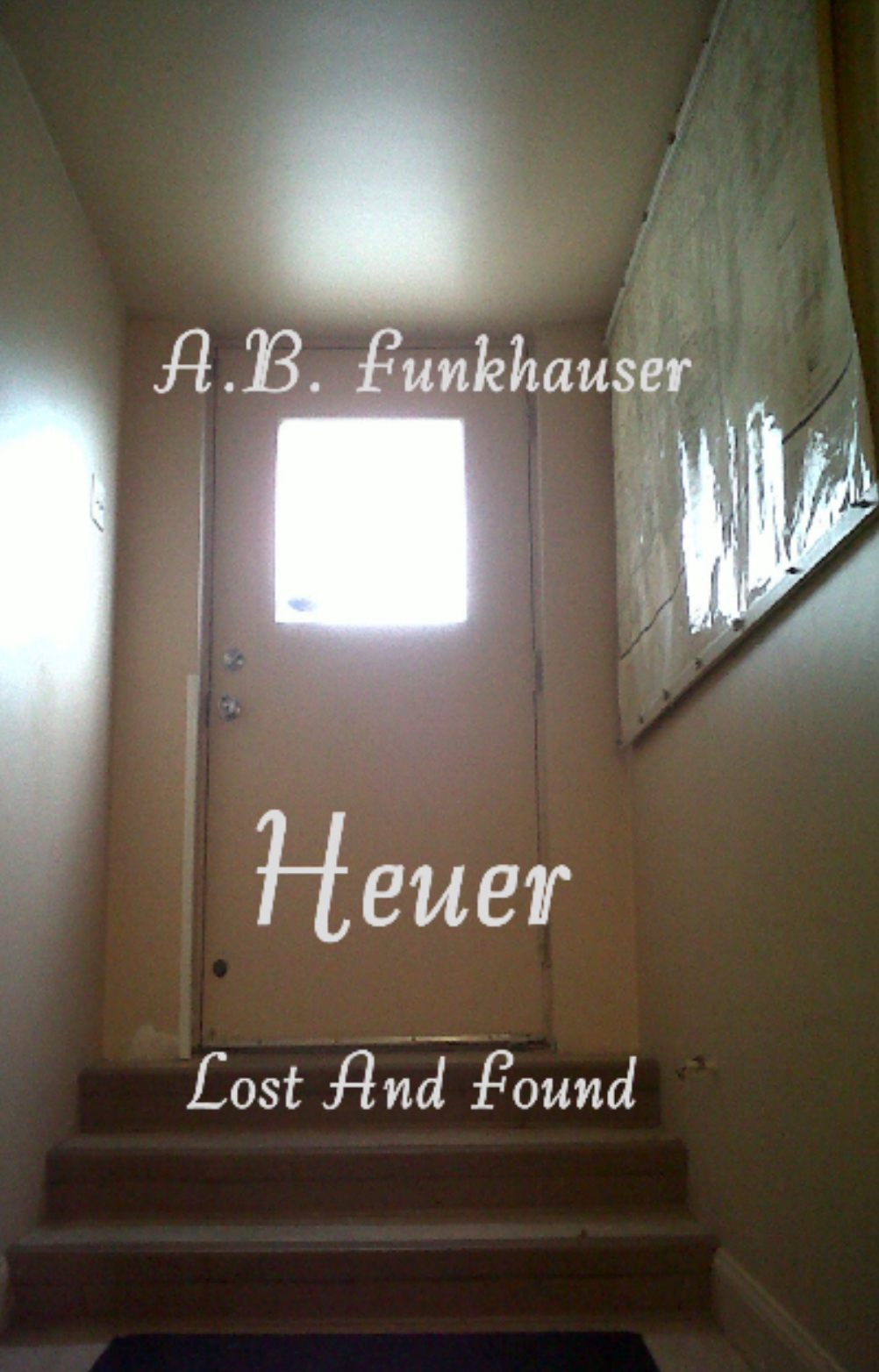
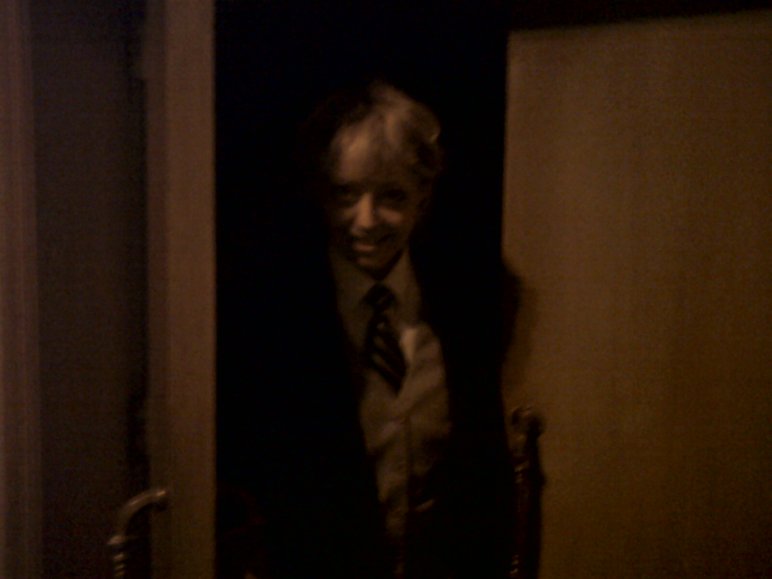
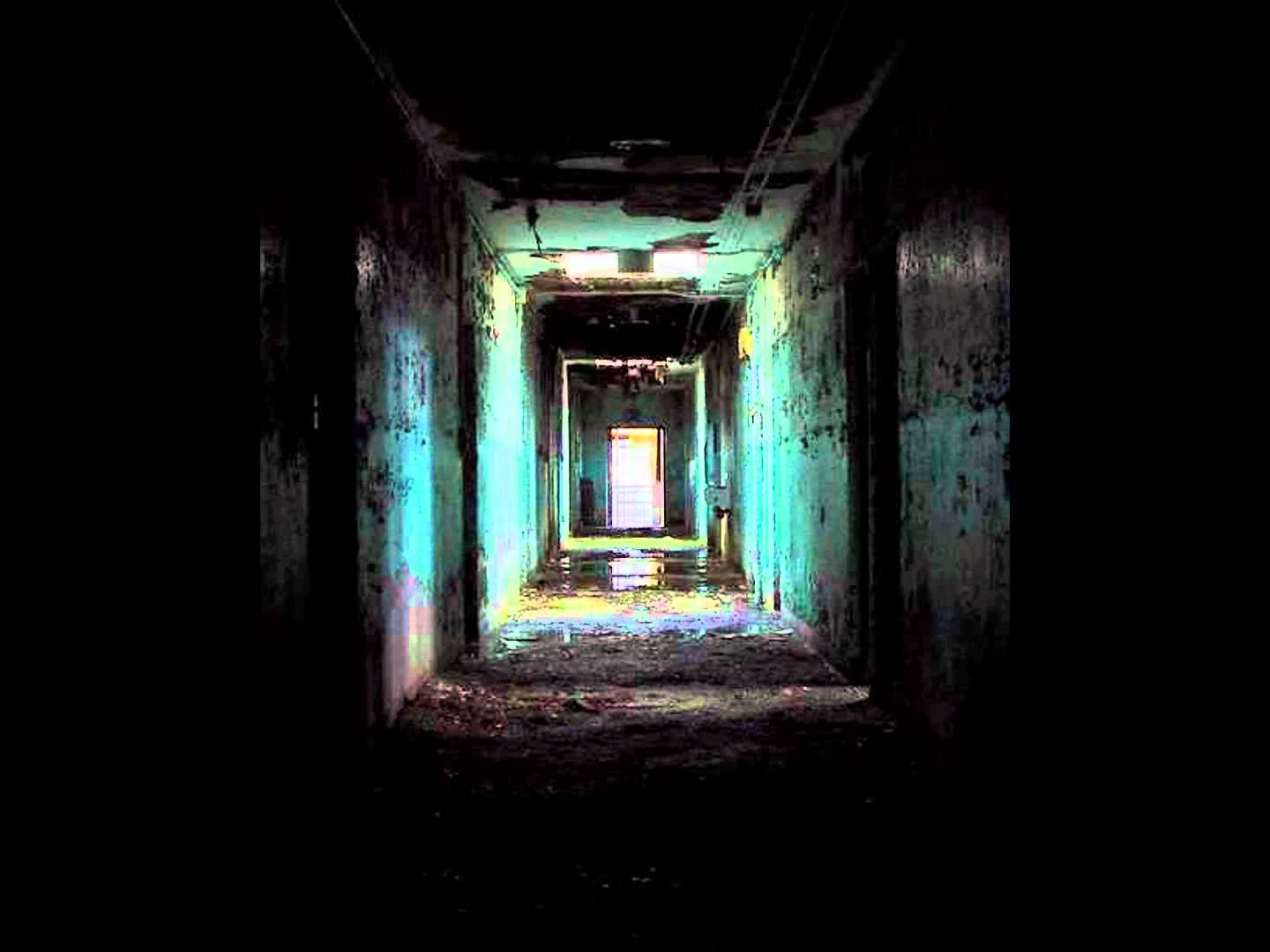
Rat: It was in the winter of 2010, and after a long day at the funeral home she looked down the long hall joining the director’s office to the back door leading three steps up and out into the parking lot. The back door on the cover is a more than accurate representation of it. It’s from a real funeral home, you know? Anyway, a thought occurred to her at that moment: What if a slightly life-challenged mortician tripped over her man shoes and landed squarely on her posterior, only to learn that someone she once knew and cared about had died, and that she was next on the staff roster to care for his remains? Freaky, no? But there it is Ad infinitum

Fly: Tell uz about Heuer?

Rat: Beyond a word rhyming with “lawyer,” Heuer the lawyer is a very conflicted man. Intensely private, heElevator - Copy craves recognition, but doesn’t want anyone to get too close. When he finds my shattered body on the floor of the Wisteria Slumber Room, he approaches, commenting on the exceptional beauty of my fur. At that moment, he recognizes beauty in an unlikely thing. I found this particularly charming about him. I must confess, however, to being more than a little put out when he confronts my murderer. I had great hopes for moral redress; instead, he takes pity and tries to help her. What can I say? Ecce homo.

Fly: That’z exciting. Where can the readerz get accezz to theze?

Rat: Through Amazon.com .ca .co.uk Bookgoodies and the publisher www.solsticepublishing.com. Here are some buy links:

Buy Link (United States)

Amazon Link: http://www.amazon.com/Heuer-Lost-Found-B-Funkhauser-ebook/dp/B00V6KLAMA/ref=sr_1_1?s=digital-text&ie=UTF8&qid=1427367625&sr=1-1&keywords=heuer+lost+and+found

Buy Link International (Country specific Amazon sites)

Book Goodies: http://bookgoodies.com/a/B00V6KLAMA

https://www.goodreads.com/book/show/25232328-heuer-lost-and-found?from_search=true

Direct buy presale link (United States): http://www.amazon.com/s/ref=ntt_athr_dp_sr_1?_encoding=UTF8&field-author=A.B.%20Funkhauser&search-alias=digital-text&sort=relevancerank

Also, information will be posted as it becomes available on her website www.abfunkhauser.com and her author page on Facebook www.facebook.com/heuerlostandfound. I believe she posted a most excellent profile of your alter ego there, Fly. (laughs)

Fly: Zome inspiration that. What would you zay haz inzpired A.B. Funkhauser in real life?

Rat: She has an amazing support group—her family, her writer’s group The Brooklin 7, and pretty well everyone she comes into contact with, from friends at the grocery store and local coffee house to the lady who helps her with her printing at Staples. She also maintains close connections to friends and work colleagues in funeral service, a business I must say that can easily be misunderstood with little effort. She believes in the work, and through writing has tried to shine a light on it.

Fly: And any author or artizt can vouch for how important thoze things are. Working as a funeral director, what iz Mz. Funkhauser’z take on life?

Rat: Like most funeral directors, she is governed by a strong sense of altruism fueled by the belief that life chooses us and we not it. She celebrates it daily, from simple chores to writing new chapters. And she loves the outdoors. It’s been a long winter here in Canada. She needs to get outside and roam.

Enid - CopyFly: In the ztory, we have Enid on one zide, who lozez zomeone important to her – Heuer – without a chance to zay a final goodbye. On the other zide, we have Heuer whose ztory, and in zome way, life itself unfoldz after hiz death. In a zingle ztroke, you introduce uz readerz to both our greatezt fear and our greatezt wizh!

Take uz through thiz experience with regardz to getting zecond chancez in life. Which perzpective would you zay you lean more towards in real life?

Rat: The first thing Funkhauser got rid of after her thirtieth birthday was the idea that all she had in front of her was second chances. She decided instead to roll with the idea that it’s all a continuum…good days, bad days, successes and failures. She refuses to see the end. She sees the next day and all the promise that comes with it. On a micro level, if she suffers less than three disappointments in a day, it’s been a pretty amazing day!

The character Heuer in life goes through the motions of working and acquiring “stuff”. His house is literally packed to the ceiling with ‘treasures’ signifying a life in progress. But there is no real human contact. He avoids his neighbors wherever possible, does not have a spouse or significant other, and lives through what he sees on the television and in old photos. After death, being found is prime to him because his objects can’t call for help, and there is no one out there looking for him.

On the opposite end of the spectrum is Enid. She has done everything her society expects of her: she has a career, a spouse, family, friends and hobbies. But her life is changing. Her eyesight is blurred; her step, less sure footed. “There is unfinished business here,” Heuer says, and it’s to that business that the book turns; so not so much a second chance, but a recognition that the drama and comedy are still continuing.

Fly: That anomaly iz a work of art! I have to bring up a literal one at thiz point, though – The Lamp. Very much living, myzteriouz and absolutely fascinating! Care to introduce uz to it?

The Lamp embodies the spirit of the funeral home matriarch who died decades before. Anchored to the floor by her griffin’s feet, she can travel in the minds of others, but cannot leave her place in the dusty, cramped funeral home basement. There is a parallel here; that her domicile closely resembles Heuer’s and that their predicaments are similar. It was inevitable that the two should become allies, although their relationship is a strained one.

Fly: And you embody one of them?

More Heuer, I think. As I said earlier, rats have a bad rap owing to history and human malfeasance. The same is true for Heuer. He carries with him the sins of his father. Just by being born, he is convinced that he is bad, and rather than try to overcome it, he embraces it in his twenties. The tragedy for him is that his life is a lie and all the angst that ruled him in life was completely without merit.

Fly: Alright, don’t say anymore! I can barely control my urge to flip through the pagez right till the very end. When doez the book come out?

Rat: It hits all the AMAZONS April 23, 2015. Presales began March 26, 2015.

Fly: Time to mark our calendarz then. For now, we make do with the preview. Thank you, dear Rat, for your attendance today.

Rat: You can call me ‘The’. That’s my first name.

Fly: Really?! Mine too! Damn, what are the chances??Rat

Rat: (laughs) That’s my point, dear friend. You and I share the same hang-ups. Of course we’d align. Amicitiae nostrae memoriam spero sempiternam fore.

Fly: The Fly, mind you. It’s time to get out of the funeral parlour! And to all the readerz, enjoy the excerpt from Heuer’z pozthumouz world!

Happy living,

The Fly

It's happening April 23, 2015
It’s happening April 23, 2015

 AN EXCERPT FEATURING “RAT”

Rat should have seen it coming. He was a rat after all and therefore genetically predisposed to a shorter life. As such, he should have taken better care. But tender concern for his friend obscured his view, and this deprived him of a rodent’s perfunctory need to avoid detection.

Mrs. Emmy Shawson-Cooke-With-An-”E” late of The Springs by way of Baycon Hill had died quietly in her bed in her ninety-sixth year. Owing to her advanced age, her family decided that a little-more-than-this-side-of-nothing was required to get her on her way as quickly as possible. To that, arrangements were concluded between Teddy Shawson-Cooke-With-An-”E,” her great nephew and heir, and Charles Emerson Forsythe, funeral director extraordinaire.

“I’m very sad to hear of your great aunt’s passing,” Charlie said somberly, for he liked Emmy very much. A wealthy woman, she was a doyen, a neighborhood fixture, raising funds for world wild life, Christian children and Ethiopian famine relief. But she was more than just money. At the heart of her was a genuinely good human being who said what she meant, and acted on her commitments. In the early years, she was a constant fixture at Weibigand’s, resplendent in a magnificent suite of emeralds that Charlie never tired of commenting upon. “I bring in the business, don’t I Charlie?” she would say through cherry lips under a pillbox hat. Indeed she did, and Charlie encouraged her familiarity. Both shared a special bond. Even after her (some said) forced relocation to the nursing home in The Springs, she never failed to fire off emails to her Charlie to make sure he was okay. And Charlie always visited her on her birthday and at Christmas.

Emeralds? Rat was barely two years old and so had never met Emmy Shawson-Cooke. But he knew well enough about gemstones and other things too, and so it was to this that he turned his attention as he repositioned himself inside Charlie’s monk strap Prada slip on. They were in the front office, Rat’s favorite room by far. It faced the street, was pleasantly lit, and with its high coffered ceiling, offered stunning acoustical advantages. Charlie was reminiscing with Teddy about the gemstones: They sparkled blue at their centers, spanning outward only to be confined devilishly in beveled frames of seawater green. Spectacular—like the Bering Strait meeting the Caribbean Sea. Emmy’s late husband Cecil joked that they could shame Tsars and tease laughs from stone.

“I beg your pardon,” Charlie said noticing Rat beneath him. It was Charlie’s habit to remove his shoes in mid-afternoon to promote better circulation, but they were in the way now under the large desk and he took care not to disturb the Weibigand mascot as he moved the shoes off to one side.

Teddy Shawson-Cooke shifted from haunch to haunch, his incredible heft straining the pound for pound capacity of the Faux Toscano Victorian Rococo wing chair he was sitting on. Forsythe, sensing the man’s discomfort, did his best to speed up the meeting. Emmy had prearranged her funeral and Teddy was undoing as much of it as he could because, he said, “there was no one left” and “doing her up for nothing was just plain stupid.” Truth was, Teddy had the power to add the money saved from a cheapo funeral to his aunt’s estate, from which he could pay himself as executor.

Charlie smiled down at Rat who, in an act of implicit trust, dozed off in his shoe.

“Allow me, if you will, to think out loud,” Charlie said, in anticipation of what Teddy wanted to serve up next. If the meeting went on much longer, Emmy’s casket choice would be undone too and no one at Weibigand’s—Charlie most all—could bear to put Emmy into anything less than the mahogany she’d paid for years before. “Your great aunt put her faith in us to carry out her wishes. I understand where you are coming from, but I must insist on the single night of visiting she paid for.”

Shawson-Cooke, in saying nothing, red-flagged Charlie, and he picked up speed. “Now the emerald suite. I trust she will be wearing it, as always?” Teddy replied that it was “long gone” save for the ring which, he hoped, “found its way out of the nursing home before someone else got to it.”

Down on the floor below, Rat dreamed of Carla and, more particularly, her less than utterly no-good spouse Danny Blue—a musician in a band that had, in the space of two years, eroded the family fortune on protracted road trips through northern Canada. Designed to boost the band’s profile and hopefully springboard them into other gigs in Manitoba, the latest tour had bogged down south of Parry Sound and Danny Blue had forgot to come home. The issue at hand was money. Plain and simple. And in dreams, Rat searched for a solution.

Thank you Malay for your kind hospitality. All the best to you and much success for Kalki Evian.

Find it on Amazon, Barnes and Noble and Bookgoodies. Check out my review on Goodreads.

HEUER LOST AND FOUND: THE EXCERPT

“Come with me, and I will show you worlds.”


At last, HEUER LOST AND FOUND is ready to go with presales beginning March 26 to the launch on April 23rd on Amazon. It’s been a long, exciting journey marked with encouragement and a lot of learning. I’ve made so many friends along the way, so much so that I owe this space and the people that help fill it a special nod all their own. In the coming days, I’ll be talking up my ladies in the Brooklin 7, my incredible sister and authorly inspiration Cryssa Bazos, and long time friends Gilda Heinrich Rousseau and Suzanne Fairbrass Stacey. I will also pay homage to the crew at the Wine Rack, the guys on the Canadian Poncho Car site, and the amazing staff at the Pickering Metro; all of whom make stepping out the door an adventure. Thank you. I’d be remiss if I didn’t mention Solstice Publishing, it’s staff—who are also writers—and the amazing authors I’ve grown close to as a member of the Solstice Family. All in due time. Today, is for every person I’ve spoken to who expressed interest in HEUER LOST AND FOUND. I owe you an excerpt.

Chapter Two

Two Weeks Ago

The house, like the man who lived in it, was remarkable: a 1950s clapboard-brick number with a metal garage door that needed serious painting. Likewise, the windows, which had been replaced once in the Seventies under some home improvement program, then never again. They were wooden and they were cracked, allowing wasps and other insects inside.

This was of little consequence to him.

The neighbors, whom Heuer prodigiously ignored, would stare at the place. Greek, Italian, and house proud, they found the man’s disdain for his own home objectionable. He could see it on their faces when he looked out at them through dirty windows.

To hell with them.

If the neighbors disapproved of the moss green roof with its tar shingles that habitually blew off, then let moet_champagne_partythem replace it. Money didn’t fall from the sky and if it did, he wouldn’t spend it on improvements to please strangers.

They were insects.

And yet there were times when Jürgen Heuer was forced to compromise. Money, he learned, could solve just about anything. But not where the willful and the pernicious were concerned. These, once singled out, required special attention.

Alfons Vermiglia, the Genovese neighbor next door, had taken great offense to his acacia tree, a towering twenty-five foot behemoth that had grown from a cutting given to him by a lodge brother. The acacia was esteemed in Masonic lore appearing often in ritual, rendering it so much more than just mere tree. In practical terms, it provided relief, offering shade on hot days to the little things beneath it. And it bloomed semi-annually, whimsically releasing a preponderance of white petals that carried on the wind mystical scent—the same found in sacred incense and parfums.

What horseshit.

It was a dirty son of a bitch of a tree that dropped its leaves continuously from spring to fall, shedding tiny branches from its diffident margins. These were covered in nasty little thorns that damaged vinyl pool liners and soft feet alike. They also did a pretty amazing job of clogging Alfons’ pool filter, turning his twenty-five hundred gallon toy pool green overnight.

This chemistry compromised the neighbor’s pleasure and it heightened his passions, blinding Alfons to the true nature of his enemy. He crossed over onto Heuer’s property and drove copper nails into the root system. It was an old trick, Byzantine in its treachery; the copper would kill the tree slowly over time leading no one to suspect foul play.

weird vistaBut Heuer was cagey and suspicious by nature, so when the tree displayed signs of failure, he knew where to look.

The acacia recovered and Alfons said nothing. Heuer planted aralia—the “Devil’s Walking Stick”—along the fence line and this served as an even thornier reminder that he knew. And if there was any doubt at all, he went further by coating his neighbor’s corkscrew hazel with a generous dose of Wipe Out.

Intrusive neighbors and their misplaced curiosities were, by turns, annoying and amusing and their interest, though unwanted, did not go unappreciated. The Greeks on the other side of him weren’t combative in the least and they offered gardening advice whenever they caught him out of doors. The man, Panos, talked politics and cars, and expressed interest in the vehicle that sat shrouded and silent on Heuer’s driveway. He spoke long and colorfully about the glory days of Detroit muscle cars and how it all got bungled and bargained away.

Detroit GTO“They sacrificed an industry to please a bunch of big mouths in Hollywood,” Panos would rant in complete disregard for history: Al Gore and Global Warming didn’t kill the GTO; the OPEC oil crisis did. But there was no point in telling him that.

Panos was an armchair car guy and incurable conspiracy theorist. He also kept to his side of the fence, unlike his wife, Stavroula, who was driven by natural instinct. Not content to leave an unmarried man alone, she routinely crossed Heuer’s weedy lawn, banging on the door with offers of food and a good housecleaning.

Heuer had no trouble accepting her cooking. But he declined her brush and broom. Was it kindness, or was she trying to see inside? He suspected the latter.

No one was ever seen entering Heuer’s house and while this piqued public interest, he never gave in, not even to those who were kind to him. He liked Panos and Stavroula and he regretted poisoning their cat.

But not enough to let them in to his home.

Others on the street had less contact with him. Canvassers at election time would disturb him, in spite of the lawn sign warning the solicitous away. That this didn’t apply to neighbor kids brave enough to pedal cookies and magazine subscriptions in spite of the sign, was a testament, perhaps, to some residual soft spot in his heart that endured.

Even so, he knew that people talked about him and, frankly, he had trouble accounting for their fascination. Short, curt, bespectacled, he courted an ethos that favored enforced detachment. When people got close enough to hear him speak, they detected a trace of an accent. Now faded after years of U.S. residency, his speech still bore the unmistakable patterns of someone undeniably foreign. Elaborate, overwrought and heavy on the adverbs, he spoke very much like his neighbors. Yet the distance between them was incalculable…

***

Day 1: Post Mortem

Heuer shook his head, finding it especially odd that he would think of such things at this particular moment. The circumstances, after all, were beyond peculiar. Coming out of thick, dense fog, standing upright, looking wildly around, and having difficulty comprehending, the last thing that should trouble him was human relations.

The man on the floor would have agreed, had he not lacked the resources to speak.

Heuer canvassed his surroundings. The room, still dark, the shades drawn, and the plants Stavroula forced on him, wilted and dry, bespoke of an unqualified sadness. His computer, left on and unattended, buzzed pointlessly in the corner, its screen saver, a multi-colored Spirograph montage, interspersed with translucent images of faceless Bond girls, twisting ad infinitum for an audience of none.

Back StairWhat happened here?

The bottle of Johnnie Black lay open and empty on the bedroom floor, along with a pack of Marlboro’s, gifts from an old friend. The desk chair lay on its side, toppled, in keeping with the rest of the room. His bed sheets were twisted, the pillows on the floor, and there were stains on the walls; strange residues deposited over time representing neglect and a desire to tell.

He looked down at his hands. They kept changing; the veins, wavy, rose and fell like pots of worms.

Trippy.

There was no evidence of eating, however, and this was really weird, for it was in this room that Heuer lived. Flat screens, mounted on the ceiling and on the desktop, kept him in line with the world outside in ways that papers could not. Screens blasted twenty-four and seven with their talking heads and CNN, whereas papers were flat and dirty, suitable only for the bottoms of bird cages. He cancelled the dailies first and then the weeklies, seeing no value whatever in printed words.

Pictures were another matter. Several in paint and charcoal and sepia covered the walls and floors. He loved them all, and he stared at them for hours when he pondered. His beer fridge, humidor, and model rocket collection completed him; housing the things he loved, all within perfect reach.

His senses, though dulled, honed in on a scent, distant yet familiar, coming from inside the room. It was bog-like-foul like a place he’d visited long ago, buried under wood ash. He frowned.

What was the last thing he ate? Did he cook or go for takeout? He wanted to go down to the kitchen to check, but found, to his astonishment, that he could not get past the doorframe into the outer hall.

Nein, das kann nicht sein!—Now this is not right!—he fumed, switching to German. He would do this whenever he encountered static. The spit and sharp of it forced people back because they could not understand what he meant.

Unballing his fists he felt his chest, registering the sensation of “feel”—he could feel “touch,” but he could not locate the beating heart. Consciously knitting his brows, he considered other bodily wants, his legal mind checking and balancing the laws of nature against the laws of the impossible. He could not, for example, feel “hunger” and he wasn’t dying for a drink either.

Was this a mark of passage into the nether? The man on the floor had no comment.

He thought about his bowels and if they needed attention, but that, to his great relief, no longer appeared to matter. Regularity, in recent years, wasn’t all it was cracked up to be. When he was young, he reveled in a good clean out after the morning coffee because it reset his clock and established the tone for the rest of the day. Not so latterly. His prostate had kept its promise, letting him down, enlarging, pressing where it ought naught. Awake most nights, he lost sleep and dreams.

With this in mind, he bounced up and down on the soles of his expensive shoes in an effort to confirm if he was awake or not. Perhaps he was sleepwalking, or heading off to the can for another urinary evacuation that wouldn’t come?

The man on the floor ruled out these options.

He tried the door again, and again, to his dismay, he could not leave.

What to do? What to do?

‘I think, therefore I am,’ went the popular saying, but what good was ‘being’ when one was confined to a bedroom like a rat in a cage?

He struggled to remain calm, just as he became aware of that heavy oppressive feeling one gets before receiving bad news. Pacing back and forth across the ancient floorboards in the house he was born into, he checked for the kinds of incriminating evidence the court of public opinion would hold against him once found. Pornography, loaded handguns, too many candy wrappers all had to be dispatched before someone inevitably broke the door down.

As light turned to dark and day gave over into night, Heuer’s thoughts came faster and faster, in different languages, interspersed with corrugated images, accompanied by generous doses of Seventies rock; a fitting sound track for the old life, now ended.

He fell to his knees. Somewhere in this mélange was something to be grateful for and with time, he was sure, he would figure out what that single, great, thing might be. For now, all he could really do was take comfort in the fact that his death had been perfect.

***

See the first trailer  https://www.youtube.com/watch?v=f3beUBWf2CQ

Definitely see the NEW ONE

Interview Part 1: https://www.youtube.com/watch?v=g2yhaXfh-ns

Interview Part 2: https://www.youtube.com/watch?v=WoPthI1Hvmo

BUY LINKS:

Preorder Link: http://www.amazon.com/s/ref=ntt_athr_dp_sr_1?_encoding=UTF8&field-author=A.B.%20Funkhauser&search-alias=digital-text&sort=relevancerank

Amazon Link: http://www.amazon.com/Heuer-Lost-Found-B-Funkhauser-ebook/dp/B00V6KLAMA/ref=sr_1_1?s=digital-text&ie=UTF8&qid=1427367625&sr=1-1&keywords=heuer+lost+and+found

Book Goodies: http://bookgoodies.com/a/B00V6KLAMA

Thank you. 🙂

SOMETHING NEW!

I love a new video, don’t you? What makes it even better for me is that I made it myself and I can’t stop groovin’ to it.

Paranormal mortuary fiction with a touch of gonzo never felt so good! Voila!!

THENCE COMES THE DARKNESS…AND THE LIGHT

My guest blog at author Rachael Stapleton’s Mysterious Ink Spot. Appropriately dubbed “The Treasured and Tipsy Timeslip” the spot asks writers to detail places real and imagined that they have visited or would like to visit. Congrats to my friend Rachael for a cool idea and a truly off planet experience.

“Who knows what evil lurks in the hearts of men. Only The Shadow knows…Bwahahahahaha.”

For many my age and younger, knowing the origin of the above might be a bit of a stretch: yet I do. Corny? Yes. Hilarious? Absolutely! The quote, or more correctly, the radio program to which this voice over belongs comes from none other than The Shadow, which got its start in pulp fiction and later ran an incredible seventeen years of American radio from 1937 to 1954.

Featuring lurid tales narrated by a supernatural all-seeing being that always knew better than the affected hapless humans it oversaw, The Shadow spoke to me in reruns throughout the Seventies.

What got me was the voice. What hooked me was the medium. Radio, you see, forced me to conjure up images of just where the plays took place. As a ten year old, it was no mean feat, seeing that my world barely extended past the hydro field in summer and the school yard in winter.

“What evil lurks?” I wondered. And was it always in sinister places?

The answer, I found, lived in dreams, and it was to some of these that I return over and over again years after they first played out. That I have recurring dreams—usually in Technicolor—I think speaks to the impact of radio: if given a choice, I would color my dreams no matter how frightening. Somehow, in color, the sinister seems palatable. Even inviting.

PLANET OF THE BATHROOM STALLS
Apes
I could relate to Cornelius’ sensitivity, but I could not get my head around the human “hunt” scene in PLANET OF THE APES. Gross.

I remember finishing a harrowing week of Grade 12 second term exams. Exhausted, relieved and flat out broke, I had no choice but to celebrate my accomplishment with a long sleep. Waking in dreams, I was confronted by a highly stylized ape man in an orange jump suit. He wasn’t Roddy Mcdowall from Planet of the Apes, but a curious hybrid that co-opted equine features in a high cheek-boned, narrow face that embraced intelligence and a promise. The ape did not speak as he took my hand, ushering me over verdant hills backed by brilliant vistas I instantly recognized from the beats out of Sgt. Pepper’s.

We were barely out of the Seventies at this point, so strawberry fields made perfect sense, even if my companion—a behemoth of eight feet or more—could have easily made Poe’s House of Usher his home. I asked him where he was taking me, but the ape said nothing, pulling me along with kind, if not gentle urgency, until, at last, we arrived at our destination: a row of bathroom stalls as orange and shiny as his coveralls. He wanted me to step inside the first one, yet I could not. It was a pay toilet, and I didn’t have a dime.

THE LAKE AND THE DRAGON
Wikimedia Commons 3.0

It will be eighteen years this May since my amazing German daddy passed away while on vacation in sunny Florida. His death, completely unexpected, knocked all of us near to him on our collective rear ends. Yet his passing was perfect—at least for him. My dad came from another age, an age currently celebrated on AMC’s Mad Men. Cool, collected and always on top of his game, my pa drank scotch and smoked cigarettes to his end of days: his pockets, when turned out, contained an empty pack of Chesterfields. He smoked his last one. Good on you pa. I missed him in those early days—I still do—yet in the afterburn of the funeral, seeing him again was paramount. It was not long before he visited me in dreams, this time in a lake setting muted with sepia tones save for a cobalt sky and bone bleached trees denuded of their summer leaves. My dad, you see, was renowned for saving the day. And so it came as no surprise when I tipped my fishing boat and fell into the dark water, that he would rescue me from an odd looking creature that reminded me of TV’s H.R. Pufnstuf.

https://www.youtube.com/watch?v=j5e9yCB-hiw Confronted by the large yellow beast with his

I didn't mind Puf, but I really dug Witchypoo's ride.
I didn’t mind Puf, but I really dug Witchypoo’s ride.

oversized spots and tousled felt-twist mane, my first impulse was to shoo him away. “Be gone absurd beast with your goggly doll eyes!” Before I could reach him, strong arms overtook me, drawing my close. It was dad in his favorite black and rust hunting jacket, impossibly dry despite the cold water we found ourselves floating in. Pufnstuf, the dragon, opened his soft felt mouth at the sight of dad, as if to frighten him, but my father just laughed, reaching out with one of his short fingers (the rest of it claimed by a band saw in the Fifties) to poke the silly bugger in the eye. Puf retreated beneath the waves. I haven’t been back to the lake lately, nor have I been visited by the large, yellow, felt-mouthed beastie, but I wish it so most terribly. My dad is there, and I’d love to see him again.

THE HOUSE OF USHER AS HOME
maxresdefault.jpg
maxresdefault.jpg

Edgar Allen Poe’s Fall of the House Usher stayed with me if only for the author’s assertion that the cursed family tree ran vertically and without branch. “How strange,” I thought at the time. Yet, when I woke for the first time in an amazing home—high ceilinged and trimmed with thick mahogany baseboards and crown molds—I knew where I was. Imagine a long hall, the plaster walls stained cerulean blue to compliment large crystal chandeliers to mark a white ceiling honeycombed with bowed crossbeams of black and tar. The hall, never ending, opens every thirty feet or so into rooms beautifully decorated from the Age of Empire; each a different color, each recognizable every time I visit because I’ve had this dream before. And never, ever, is there an intersection along the way. It is Usher’s family tree, but I do not fear it. This is not a family tree cursed, but a home filled with history, its rooms lovingly curated by something I have yet to see.

MISTRESS BISCUIT AND HER SHORTBREADS
www.travelmob.com
http://www.travelmob.com

In a similar vein, I have visited the home of Mistress Biscuit many, many times. Each time, it is the same. I wouldn’t have it any other way. The front door opens into a spectacular foyer, shitake monochrome walls accented with glass and chrome backed by sky high windows capped by a vaulting ceiling twenty feet above our heads. I say “our” because the guests are there, wrapped in looks reminiscent of the disco era, but tasteful to one who was there. “Mistress is busy,” the tall, slightly balding fellow in livery informs me. “Would madam care for a swim before chicken?” Don’t mind if I do. Pocketing a couple of sweeties fetched off a silver tray of shortbreads and arugula, I head to the indoor pool where a friend awaits. He is young, wearing a white terry cloth robe. I have no idea who he is.

Trippy, no?
Thank you, Rachael Stapleton, for taking me back…

Adult, unapologetic, and cognizant, I wish you good day. Let’s stay above it.

ABF

For more Rachael, please visit:

www.rachaelstapleton.com

http://rachaelstapleton.blogspot.ca/

https://www.facebook.com/pages/Author-Rachael-Stapleton/137831156290570

https://twitter.com/RaquelleJaxson

https://www.goodreads.com/author/show/7271862.Rachael_Stapleton

Radio Funkhauser, Part Deux

The nascent author discusses funeral parloring, Six Feet Under, lasting friendships and never looking back in part 2 of her first ever radio interview for 102.7 FM Whistle Radio Stouffville. Woot! Woot!

FIRST RADIO INTERVIEW

Once upon a time, long, long ago, in a faraway galaxy, I worked in politics. It was an amazing world peopled with amazing speech makers, luminescent scribes, and ambitious policy makers jostling to get the words out.

Which is why there’s a little thing called ‘media training’. Broadly defined, media training encompasses everything from elocution to breathing to physical deportment. Perspiration was a “no, no” — Richard Nixon debating Kennedy back in ’60 cemented that — as was the exclamatory pause “um”. Um was anathema, and as I watched politicians prep from debates, I picked up a thing or two…

Good thing, because it’s my turn now. Last month, I talked up HEUER LOST AND FOUND with Charlene Jones on 102.7 FM Whistle Radio Stoufville. It was a privilege to have been given the opportunity.

“Don’t say “um,” I kept saying to myself, “for cryin’ out loud DON’T.” And I didn’t, thank gawd.

Scheduled to air March 24, I just had to share a “sneak peek”.

The Interview

HEUER LOST AND FOUND available April 23, 2015. Advance orders begin March 26 at Amazon.com.

solstice publishing

The Blog Welcomes Author Malay A. Upadhyay

I’ve only known Malay for a short while, but I can already tell you that this guy thinks DEEP. Like my favorite existentialists, Malay commits his fiction to the belief that individuals have the power to alter their existence but with unusual consequences. What lies beneath the surface is something that we, as human beings, cannot but help to toy with. In Malay’s case what lies beneath, what can be found just behind the curtain, is not one but two or more possible realities. The question always, is which one is the better one?

About the author

Malay A. Upadhyay grew up in the Eastern provinces of paradoxical India. It was a childhood of anomalies – a different spacetime, where he could not understand a friend’s passion for books on one hand even as he wrote for school elocution on the other. Recently back to contemporary Earth, he conceived many of the techno-economic ideas described in his book – Kalki Evian: The Ring of Khaoriphea – at Bocconi University in Milano. His Blog of a Fly subscribes to the elusively effervescent, ephemeral connection among beings across space and time. That is after all, a belief that underlies every piece of literature ever written.

The Book In His Own Words

Every choice we make leads to its own unique consequence. To Cover - Kalki Evianchange the consequence, therefore, one must travel back in time to change the choice. But what if such change, instead of altering our future, simply created another – one that came to exist simultaneously with our world?

This is a story of how one such moment of love led to two parallel futures; a story of how your choices have an impact far beyond the world you know; a phenomenon that we had sensed, and wished for, all along. Set in Italy, while one timeline scales a city of the future where not just people but also things like money evolve, the other cradles itself in an amalgamation of contemporary Europe with ingredients of a new age. Step by step, the story embarks on a journey in a parallel world that we all live in but rarely see.

Q & A

What inspires you to write?

Experiences, and the ideas they generate to understand how things around us function on different levels. I try to learn something every day and what I write intends more to document these than to simply entertain with a good story.

Do you listen to or talk to to your characters? (You aren’t alone 🙂 How do you interact with your characters while you are writing?

Certainly. My characters are a mix of three things: an overview to begin with, an inspiration from people I know, which gives them a shape, and their reactions which begin to unfold in each scene and situation as the story progresses, for it lends a level of detail that you could not have imagined at the beginning.

What advice would you give other writers?

There is no specific rule or method to go about a story. It just needs diligence for as long as it takes to write, and a balance of thought – to ensure that you go with the flow without losing sight of where you are going.

How did you decide to publish your books?* What influenced your to publish with a publisher or go the self-publishing route? 

I researched a bit to understand how the process of submissions works. I was lucky to have found an agent – Emerantia Antonia Parnall-Gilbert of Gilbert Literary Agency – who was receptive of new authors and clearly told me how arduous the path was going to be, and the risks involved therein. I will simply suggest new authors to be patient in their search and analysis of online information, to check how the submission process works with publishers in the country they wish to publish in, and to verify publishers/agents by checking them in any of the renowned literary database.

What do you think about the future of book publishing?*

In the medium-term, I think it will strongly be determined by the digital innovations in place. Whether as a mix of sounds, imagery, weblinks or simply the way books are read, both the phenomenon of internet-of-things and the evolution of mobile gadgets will determine how ebooks change. However, the traditional paperbacks would continue to hold fort, albeit with changes in how they are discovered in online and offline stores.

Do you have any unusual writing habits?

I blog as a Fly. That’s one! The other is my habit of taking incessant notes as and when ideas arrive, most of which happen during a re-enactment of conversations that characters may have in the story.

What inspired the book?

The futuristic ideas for Kalki Evian came to me during my time at Bocconi University in Milano. However, I am more drawn towards subtle romance in any story. That is primarily because I find it to be the most natural form of conduct between characters. It lends the strongest incentives to their actions and gifts a sense of beauty to any plot under any circumstance. It is also what makes the characters human, and the story, regardless the genre, have a soul. That is how the plot took shape.

The Excerpt

Nothing gives me greater joy than being able to shine a light on the work of others. Writing takes time; getting it out there: much more.

Malay A. Upadhyay: Kalki Evian – The Ring of Khaoriphea

To those who ceased to trust their instinct
just because everyone told everyone else
that no one did.

Foreword

Hypothesis #1: Every choice has its own unique
consequence.
This would imply that at any given time, the choice
we make leads us on an entirely different path from the one
that any other would take us on. It is like driving a car. Once
we turn right at any junction, all roads on previous left turns
cease to matter. And that right turn takes us on to a new
junction with a new set of turns, each with its own choice of
left and right, and so on. None in particular is better or
worse. It is just different. And these paths may even meet
later on.

Hypothesis #2: Time travel could be possible at
some time in the infinite future.
Time is a dimension like any other; only somewhat
beyond our understanding. The day we evolve enough to
comprehend exactly how it works, we may be able to travel
in time and return to a junction/event that occurred in the
past – our own, or maybe someone else’s.

If we combine hypothesis #1 and #2, it would
indicate that at least someone may have travelled back in
time to warn Caesar of an oncoming conspiracy, or
persuaded Hitler’s father to allow his son to become an
artist, or simply changed something in their own past. In
each instance, that change would involve going back to an
event, and may result in an altogether different set of affairs
to consequence. In other words, the second path – one
different from that which we took initially – could come
alive.
That said, we do not yet seem aware of any such
changes to our known history. Brutus continues to
exemplify treason rather than honour. Hitler remains the
author of Mein Kampf. And our life remains dotted with
specific, unchanged events just as we remember them.
These two points mean that as a consequence of any
active and influential time travel, one or more parallel
realities must come into existence, somehow unknown to us.

Hypothesis#3: We do not yet know how to time
travel.
That is a gap that exists . . . in common knowledge
as per common beliefs. But then, news from many unknown
corners of this world remains obscure.

Hypothesis#4: The relativistic view of time and
space shows a warping of the spacetime plane, audience to
the disparities in distance and time travelled with changes
in velocity.
General relativity is Einstein’s brainchild, whose
applicability to this case shall be assumed to be
hypothetical.

Malay A. Upadhyay: Kalki Evian – The Ring of Khaoriphea

Chapter 1
“Is this where she falls?”
“Two miles further south.”
“Then,” the former hesitated but asked with hope,
“is this where we save her?”
Wind blew perfectly in accordance with fresh traces
of floating memory that lay in the latter’s mind. The man
smiled. Significantly taller and older than the inquiring
other, he stood with a sparkle in his eyes, unmoved and
unblinking and gazing ahead under the faintest crease of
brows that stood in striking contrast to the amused pair
ordained by one to his right and to the tense pair of a third
who stood behind him, looking up, awaiting a sense of their
plan.
It was pitch dark on a brazen land. Clouds usually
decorated the sky at this time of the year but they had
arrived today in galore, witness to a moment of particular
significance that bore a perfect sense only to the one who
had stood there without a twitch of muscle for over an hour.
Metal cape was a rather unusual coat to adorn those heavy
shoulders, but he wore it as if he had journeyed from a
battlefield. The younger, chubby individual who
accompanied him – Bree was his name – would have
vouched that he had. The graphene, fashionably
complimented his neatly combed silver hair. Uniform white
stubble graced his cheeks, save for three short creases on the
upper end of his cheekbones. Together, it all directed one’s
focus to his sharp eyes that he relied upon to speak out more
than words could. Even under the dark shade of that
evening, his face glowed not through a visible shine but
through a perceptual radiance. Drizzle marked their borders,
illustrating the elder’s stern body language, with his hands
neatly folded at the back and fingers clasping on to each
other. Two in particular seemed to gently toy with a ring on
one of his thumbs. Bree’s younger pair of shoulders,
meanwhile, heaved under his heavy breathing. They bowed
smoothly on to fleshy arms that hung parallel to his thick
legs positioned with utmost care to stand beside but half-astep
behind the pair in boots – as if to conform to the latter’s
authority.
As the first drops began to trickle from above, the
metal-clad almost allowed himself to smile again – one
fairly invisible to any who could see him. For, the sound of
rain had been perfectly tuned to a faint rumble on the metal
rails far in the distance, reflecting a coherence that was
nothing short of little verifications that he belonged there in
that moment.
The third – a doctor and the one with the questions
initially – had heard the rumble too. He tried to stab his sight
through the darkness to find its source. The effort had
brought about a spark of excitement from within his
exhausted body. His shoulders were straighter, the dressing
sharp. Only a little pouch hung across on a thread-like string
and repeatedly bounced off the waist in constant attempts to
fly under the wind.
The little smile on the elder’s face waned amidst
continuing sounds of those drops on metal as he spoke,
unflinching still, “Any issues?”
The task that the doctor had been sent for not many
moments ago had drained sufficient proportion of his
energy. He quickly gathered his breath to reply, despite
having had enough time since his arrival, as if all air had
stalled in his lungs during the anxious moments that had
recently passed. “The information was precise. I reached
just in time to warn them. Such carelessness . . .”
“It wasn’t beyond the norm, doc,” Bree spoke with
an almost juvenile amusement, “It was an inevitable
consequence of a long chain of cause and effect that
perceivably began with a pack of milk.”
“Milk?”
“Yes, and some superstition.”
“I believe that is simply a misnomer for
carelessness,” the doctor quipped.
“It is one for precisely the opposite. Whether
superstitions have any viable meaning is trivial. They are
always true – not because they work but because they make
us believe they do. It’s a belief that often runs stronger than
even any other faith. In this case, it was one that pertained to
spilt milk – a bad omen in these parts of the world. But that
story is quite unworthy of this moment and is rather
irrelevant.”
“How can it not be relevant, Bree?”
“Because subtle chains of cause and effect are too
complex to decipher for an individual mind. There lies no
beginning to such stories, no matter how many millennia
one traverses back in time. The only matter of relevance
then is to know that life is always, and exclusively, what it
turns out to be . . . nothing more, nothing less and certainly
nothing different.”
“That explains your persistent sense of adventure,”
the doctor replied in an implied jest under a very serious
face. “What’s with the tweed cap?”
“My sense of adventure needs props, much like your
little pouch” Bree replied, contrasting his comfort in the
situation with the other’s panic.
Two large bags lay almost kissing his wet feet. The
doctor pointed at them, “I prefer mine to those!”
“Aah, yes. I would help if I could, doc. Sorry to
spoil an otherwise perfect evening . . .”
It was then that the heavy voice intervened once
more. “Perfection is a matter of perception,” the elder said,
“and there’s much left in this evening. She’s here.”
The other two looked out into the distance. A yellow
ball of light shone hazily through the heavy curtain of rain
in the dark but was intensified by a deafening horn riding on
a sudden screeching on rails that stabbed through the space.
A red light in that area was never part of the itinerary for the
train but that order stood defiant, facing the speeding frame
of metal and forcing it to apply its brakes, perhaps unaware
of the catastrophe that may follow for the souls seated
inside. The distance, though, had worked in the train’s
favour as the driver sprung into action the instant the red
light had come into view. The screech was unsubmissive,
the shock unavoidable, but the tracks lay embedded within a
slight cavernous stretch on the land. As short hills rose on
either side of the tracks, the slopes might just cushion the
near-fatal consequence that was soon to be. And so the train
slid more than sped in those last few hundred metres with a
wave of scream and confusion rippling along her entire
length. The last few coaches bounced off but followed
helplessly under the dual force of a roaring engine in front
and the waves of elevated earth on the sides. Things rattled,
tilted, inverted, shook, bounced and broke – all within the
perceived parameters, all except one.
“Make the call,” was the command. Bree sprung into
action. He closed in the fingers on his left hand and gently
rubbed the tips of the three-fingered glove he was wearing,
with his thumb. As the tips illuminated under the charge, it
seemed to the doctor as if light had stuck itself to them, for
the thin spot of illumination stretched in between as the
fingers moved away. Soon, the gluey spot of light turned
into a ray between his forefinger and the little one. It
broadened to produce a thin film on his palm, which
immediately came alive with embedded blue lights. Bree
tapped on the virtual phone.
The three scanned past the rough muddy terrain
under the leadership of the pair of feet that seemed to
outline two steps in advance, a finality of objective as to
where they intended to land. As the three approached the
only coach with a door thrown open, the anticipation on the
doctor’s face gave way to a flush of subdued panic.
Secluded from the air of shock that prevailed around the
train, someone lay unconscious, stained in red.
The victim was pulled to the other side of the slope
as his rescuers got down to business; two inspecting the
immediate wounds while the other stared at his bloodsmeared
face.
“You knew he would fall out?” the doctor asked in
haste.
“Yes,” the elder replied, his eyes fixed on what lay
before him.
“How? What of the others?”
He asked with a calm blink of those eyes, “What
would you say, Bree?”
The man climbed a few feet on the slope and began
to scan the coaches with his naked eye. At length, he replied
with eyes strained on those opaque walls, “Injuries
sustained throughout but I see a conglomeration at only two
places, both in the dismounted coaches. No deaths though,
just urgent movements and significant shock.”
“How long is it before the others arrive?”
“Half an hour for the emergency services; quarter
more for the media. In two, the area should be swarming.”
“Are we in position?”
Sweat was beginning to work its way, softening the
crisp hair of the one nursing the body. The doctor’s words
then, were those of unparalleled concern, “His heart beats
slow.”
“But beats still . . .”
“Yes. But did you check him? Is it him?”
“To every detail,” was the definitive reply. The mass
of metal heaved with the elder’s shoulders as he bent over
the body and analysed it comprehensively with a blank stare
that defied any form of indifference it may have been
ordinarily reserved for. This one belonged to a trance. The
body lay spread out with one palm clenched on to nothing in
particular. The man held something in his fist, something
that had been dear enough to have extracted every inch of
endurance in him to keep it within his grasp even through
the painful – and seemingly endless – course of his fall from
the train. The elder looked at that fist as though he could
conjure the invisible piece in his own imagination. “Hope,”
he uttered softly and blinked. The name had proclaimed
itself louder in its rarity.
He stood up and spoke, with the usual heaviness
back in his voice, “Prepare the cart.” The doctor pulled one
of the bags and dropped inside a miniature stretch of metal
wound on two small rods. He placed the bag on the ground,
stretched it wide, and began tapping on his wrist band.
Streaks of blue shone and faded where he touched it, and the
bag began to twirl from within. Inside, sand-like particles
ran over each other as they encapsulated the little piece he
had dropped inside. Once the rendering was complete, he
took out the object, poured more of the particles, and tapped
a few more times. Gradually, more and more particles
joined in to form a large replica of the tiny object.
The doctor then turned back to the other sack and
dropped another piece. The routine followed and out came a
flat board. He then placed it near the body, and stuck a
charge underneath. It slid seamlessly and activated itself.
Another push and the two boards stuck together as the air
was sucked out from between them. He then dug into his
pouch to extract a metal frame that he attached under the
contraption. A few wrist-taps later, it lit blue immediately
and the light spread along the borders of the board as the
entire mass began to float few inches above the ground.
He looked up once done. Bree was smiling. The
doctor guessed, “Electro-permanent magnets, I suppose.”
The reply was almost instant and familiarly amused,
“Not bad for an expert in biology.”
“The problem when you focus too much on one
subject,” the doctor countered, “is that you lose your grip on
the rest.”
“Unless the rest begin to converge . . .”
Bree had left a cryptic possibility free to implant
itself in the other’s mind and was aided conveniently by the
elder’s interruption to march forward.
The two men pressed charges near their torso while
the doctor climbed on his contraption. With soles lifted
inches above, the three began to move with the body. Many
minutes passed before they came by a small instalment, few
miles away from the railroad and everything else. The site
of commotion had been left far behind and only ghostly
whispers of the breeze continued, sans the drops of rain and
their clinks on metal. The doctor questioned, all thoughts
relegated in the face of a larger lump in his throat, “You
took a risk.”
It was as if the metal-clad elder had been
anticipating it. His words nearly overrode those of the
doctor’s, “One that saved some two hundred lives; perhaps
more.”
“You facilitated one accident to prevent another.”
“It was a necessary risk.”
“Enough to justify this?”
The reply came almost immediately once again, but
the voice was far gentler and had come from behind them.
“Any act has its consequence. Every act changes the world.”
Those broad shoulders turned to face the source of
the sound with an unmistakable constriction in the pair of
eyes above, as if in attempts to fashion a smile. A woman,
dressed in a silhouette sharply accentuated by a short cloak
that covered her head, came towards the three from around a
little tent. She was nearly as old as the elder but carried a
significantly warmer gaze. Her hair was wavy and grey and
seemed to rest on her shoulders with the softest touch,
fashioned with streaks of silver in the front locks.
She looked at the body that lay on the board, and
sighed. A welcoming look then followed on to the man who
sat upon it. The doctor ignored the warmth of that attention

that lay bestowed through seconds of concern. He addressed
the elder again, though with slight hesitancy, “I can’t . . .
just . . .”
“What happened?” Bree asked as if charged with
managing the doctor’s conundrums for the evening.
“Nothing,” came the desolate reply, followed by a
more professional concern, “A hospital would have been
more appropriate . . .”
“That wouldn’t be necessary. We can trust each
other on this,” replied the elder. His words were calm but
bore a striking directive towards haste.
“How . . .” an argument attempted to ensue but
gulped itself down its bearer’s throat, switching instead to a
taunt, “Are you really willing to watch this lad die?”
The elder did not speak. His eyes expressed a
strange concoction of pain and calm as he was helplessly
diverted to the lifeless body that lay in front. That entrapped
chunk of oxygen in his lungs was measured immediately by
the recently arrived. She spoke on his behalf, with a smile
that was an answer in itself, “Of course not. That is why we
have you here.”
“But how do you know I will save him?”
“Because if you had not already done that, we would
still be human.”

Chapter 2
The eyes opened gradually. Light had not entered
them for an age, or at least the brain had ceased to process it
so. Any part of the world, then, should have been a beautiful
vision to come across, but all he saw were streaks of blue
running across in mid-air against a plain white background.
Everything was hazy except these sharp blue characters, and
a crystal clear voice of a woman, as if programmed to
initialize the moment he woke up.
“Welcome. Default settings now active. Visuals
confirmed. Data status, basic. Volume level: aligning . . .
aligning . . . aligning. Saved. Thank you. Your world is at
your service.”
The streaks and the sounds faded as the background
came into clearer view – a lone glass frame stood on a white
stretch of the wall, with the words: One hand washes the
other; both get clean. His pupils narrowed in trying to read
it carefully, and immediately, little edges appeared out of
nowhere to focus on the text. There they waited, and
shivered with the confused movement of his pupils.
Fidgeting to get the little blue edges away from his sight, he
shook his head and blinked as he moved. The visuals
hanging in mid-air twitched, lost focus and tried to target
something else on that otherwise bland wall. He resisted but
to no avail and then held his eyes static on the frame,
waiting. Nothing happened. With eyes beginning to burn, he
blinked once more with a perplexed gaze fixed at the wall.
The projection of little edges joined together over the frame
and gently faded away to display a copy of that text in blue,
somewhere in the empty space, followed instantly by the
words: Curaçaon proverb. Origin: Former Caribbean. He
blinked again, and they disappeared.
“I’ve been waiting to see them. . .” It was a different
voice, equally gentle but so much sweeter. He held still,
expecting to see another series of obstructions, until
footsteps sounded somewhere to his left. He turned to find
white flat-soled shoes crisscrossing their way to him,
carrying slender legs that rose up to partially visible fingers
holding a tray, followed higher by a sparkling white shirt
sprinkled towards the top with fluffy locks of hair bouncing
around a young slyly smiling face. Their eyes met, and the
books would have spoken of an emotional concordance. But
the blue edges appeared again. Unable to draw his sight
away, he quickly blinked. The projections displayed one
line of text after another: Friuli, Fridgeon. F, 25.
Permissions denied. Possibly 1st.
“Fri-uli-,” he muttered.
“Those eyes,” she interrupted matter-of-factly, “I’ve
been waiting to see them.”
“Huh?”
“Although now the perplexity seems equally
catchy.”
“Uh-I’m . . . sorry,” he said with weak, broken
voice, continually blinking and shaking his head to ward off
the information displayed.
“You will get used to it. If you want it stopped, just
tell it so.”
“Tell what? Tell whom?”
“Your brain. The password’s right beside you.”
He turned to his right. A table lay at about his height
with a little white card embossed with an alphanumeric code
that was barely visible. He strained once again as the edges
appeared, and managed to read out the letters: QIn45.
Nothing happened.
She corrected him, “It is one word. They confused
with the caps. Sorry for that.”
He uttered it accordingly. The edges disappeared and
nothing followed, drawing his eyes to move all around the
room as if they had been let loose to absorb his
surroundings. They stood wide open in anticipation of the
source of what he had just seen. He fell back on his pillow,
already exhausted under the stress.
“You should rest,” Friuli spoke, smiling still. “Or
you won’t be able to handle it.”
“Handle what?” He enquired.
She waited, looking directly into his eyes, letting
him absorb her tease of curiosity, and then answered, “What
we have done to your world.”
The pupils changed shapes again. He was nervous.
“You?”
“We the people, Qin. Welcome back, and good
morning.”
She walked out and the room fell back to a white
stretch of space. He rose to look at himself, strapped and
bandaged in a long robe. But there was no plaster, stitches
or even pain. How long had he been there? The simplicity of
that query dragged his thoughts back to the dreadful night.
Nothing came back perfectly but in his blur, he remembered
a sudden shock, a muscular effort, a short flight, a series of
scratchy rollovers, and a determined fist. Attempts to think
further strained his nerves as exhaustion overtook a bit
more. Sleep dawned and he closed his eyes with troubled
relief. The images came back in view, but differently so: a
girl breathing heavily . . . he saw himself scream and run
away . . . a train came into view shortly after, and with it
came a feeling of uncontrollable rage. And then there was
shock, a muscular effort, a short flight, a series of scratchy
rollovers, and that determined fist.
It felt chillier and the surface his skin touched felt
rougher than it appeared. He woke again and quickly got off
his bed. His feet dragged and stumbled on their way to the
wash basin. The water was a respite but felt nearly numb
when it splashed against his face. He looked up in some
irritation to find a long stretch of glass, in the centre of
which stood a man many years older than him.
“Wh-,” he jerked back in surprise. “Who are you?”
he asked, feeling misled into believing it was glass. But the
figure mimicked him to produce an unwelcomed realization.
He looked down at his arms, closely and in disbelief. They
looked larger, and older. He tried to take a closer look at his
reflection. It was him, much older than he could remember.
His fingers slowly crawled towards the mirror but the
moment he touched the glass, more words rolled out, this
time displayed firmly over his own reflection, without a
sound: Welcome. Four more words appeared beneath as he
half-muttered what he saw: News, Weather, Sport,
Emergency. But by the time he pronounced the first of
those, the characters disappeared and were replaced by a
statement in bold: Etna wakes up, and puts everything else
to sleep, followed by more texts highlighting the headings
of various articles on the day. He nervously read them while
trying to shake away the text on glass until he found a little
series of icons beneath. He tried each with different results.
A familiar voice read out the text at one, one translated it all
in different languages, one changed the pattern of the text, a
fourth stuck to his fingers and ran along as they moved,
highlighting all text that came in its way, while another
switched to a different screen that began to ask for his
identification. With his head splitting, he drew away and
shouted, “Stop it!”
Everything vanished, and he stood there, alone, in
silence and decades older than he remembered. “The card,”
he thought, and uttered, “Qin45.” A beep sounded as he
took a deep breath, focussed on his reflection and blinked.
Texts appeared again, seemingly in mid-air, but they had no
mirror image. He strained further until he noticed little blue
streaks on the reflection of his pupil. The image was
startling, but his focus was immediately drawn away on to
the text itself: Permissions denied. He tried again, to a
similar result.
He would have screamed again, this time to an
audience extending far beyond the bounds of his room. But
with those very first steps that went backwards without any
direction or intent, carrying a lost mind and a panicking
body, the sweeter voice returned, “I told you to rest.”
He turned in anger to face the face he could not help
being intrigued at. He fought the diversion and addressed
her sharply, the intensity of his voice increasing with each
word, ‘Rest?! You tell me where I am. You tell me RIGHT
NOW!”
“Anger won’t help you, Qin,” she spoke softer still.
“You know this better than most people. Nor would
restlessness, or even solitude.”
The last word hit him as hard as his confusion had,
for it ran on inconvenient memories that came back
distinctly. He breathed again and asked, simply but sternly,
“Where am I?”
“I would tell you right now, but please spare a
thought to this: you are alive. And if you can remember
anything, it was quite unlikely.”
He did realize the fact, for if nothing else, he did
remember an excruciating pain that he had shut his eyes
amidst. He remembered, if nothing else, that more painful
had been his final regret that had stormed out from within
all illusions of uncertainty and righteousness, as he lay in
seclusion, smeared in his own blood and clenching on to
what felt most dear in that moment. I didn’t see, he had
thought as his grip had tightened over a ring. And then, it
had all gone blank.
The nervousness marginally waned as the breathing
normalized but he was restless still when he asked, “Why do
you keep calling me that?”
“Calling you what?”
“Qin, you said.”
“Aah, but that is what we have had registered here.
Is that not right?”
Qin thought for a while but could not explain his
agitation under the severe headache. He exclaimed in agony,
“I . . . don’t know.”
Friuli enquired, “Do you remember anything?”
“Only vaguely. Bits and pieces, but it’s too
difficult.”
“It will come back. You need rest.”
“What is all this, these screens? And what the hell is
on my eye?”
“So you activated it again?” she asked, walking up
to help him back to his bed.
“I had,” he said guiltily, feeling much easier with her
very first touch. “. . . switched it off.” He continued, as he
looked at the smooth stretch of her fair skin, “Couldn’t take
it.”
“You have been in a coma for quite a while, Qin.
Things have changed as they always do with time. So it is
not that the world is upside down now but as you can see,
there have been a few developments. What you see are
automated projections designed to assist you with any
information you need in real time. Some you can switch off
while others are ingrained in the objects.”
“But why on my eye?”
“On your eye is nothing spectacular. Most have it.
As to why we put you in such a shock with it, I extend both
my apologies and my sympathy. These were orders,
intended to help you accommodate with what has come to
be. Quite naturally, you wouldn’t have allowed the
implantation once you woke up, given that you are still,”
she hesitated, “a bit old school.”
“This thing is implanted?!” He asked with a sudden
high pitch.
“Well, of course it is. Is it really that bad a thing,
considering how bad your eye was after that fall?”
“H-how bad was it?”
Friuli gave a gentle smile as she tucked the sheets
around him, never taking her eyes away from his. She
whispered, pointing to the whiteness of the entire room,
“Let’s just say all white is better than all black.”
He knew panic would not help things. He was just
too oblivious at the moment. Friuli walked around his bed,
setting the table straight, replenishing it with fresh water and
taking a good look at everything else.
“The water-,” Qin said, under subtle hiccups,
“doesn’t taste . . . very well. It doesn’t taste at all actually.”
“Well, I guess it’s absolutely pure then! I’ll put that
on record for the maintenance staff,” she mused, and spoke
with greater sincerity, “Sleep Qin. Get your energy back.”
As she approached the door, he interrupted again,
almost shaking in his voice, “Quite a while,’ you said. How
long is that?”
Friuli stopped to take a heavy breath. Few seconds
passed in silence before she answered with a decisive effort,
“Twenty three years.”

Thanks for stopping by.

For More Malay, look here:

Blog: http://kalkievian.com/earth

Facebook Page: http://facebook.com/kalkievian

Twitter: http://twitter.com/kalkievian

Bookgoodies link for Country-specific Amazon sites: http://bookgoodies.com/a/1625261888

Link to Book at Goodreads: https://www.goodreads.com/book/show/24919828-kalki-evian?ac=1

Link to Print Book at Barnes and Noble: http://www.barnesandnoble.com/w/kalki-evian-malay-upadhyay/1121223836?ean=9781625261885

Link To Author Page On Amazon: http://amazon.com/author/malayupadhyay

Link to Author Page on Goodreads: https://www.goodreads.com/malayupadhyay